
Service Area
Assessment
Office
Buildings
Planning
Closeout

Roof Scope Support for General Contractors Building in Stark County
New construction is moving in a few different directions around Canton right now, from Hall of Fame Village buildout to I-77 flex space to school additions. Whichever project we're brought into, our job as the roofing sub is to make your schedule, not complicate it.
What GCs Need From a Roofing Sub on a Live Job
A general contractor managing a multi-trade schedule doesn't have time to chase a roofer for submittals or wait on a slow shop drawing turnaround. We submit product data, warranty documentation, and system details on the timeline your project needs, and we show up to the pre-construction meeting ready to talk sequencing and cost together.
We also flag conflicts early. If a mechanical layout is going to fight with a roof drain location, or a parapet detail on the drawings doesn't match what the manufacturer's system actually requires for warranty compliance, we raise it during submittal review instead of during installation, when it costs everyone more.
Tie-Ins, Additions, and Phased Construction
A lot of the work we see from GCs in this market isn't ground-up new construction, it's an addition tied into an existing building, or a phased project where part of the facility stays occupied while another part gets built out. School additions, plant expansions along the I-77 corridor, and retail buildout at centers like Belden Village all fall into this category.
Tie-in work is where roofing mistakes usually happen, because the new membrane has to marry cleanly to an existing system that may be a different manufacturer or a different generation of material entirely. We document the existing roof condition before we start, confirm compatibility, and detail the transition so it doesn't become the callback six months after the ribbon cutting.
Sequencing Roof Work Into a Multi-Trade Schedule
- Confirming deck is dry and ready before roofing crews mobilize, so we're not chasing framing delays
- Coordinating rooftop mechanical and electrical curb locations before insulation goes down
- Getting the building dried in early enough to protect interior trades from weather delay
- Sequencing edge metal and coping after masonry or EIFS trades finish parapet work, not before
- Scheduling final inspection and manufacturer warranty walk before substantial completion
Getting these handoffs right is mostly about talking to the other trades early instead of simply showing up on our start date. We'd rather have a short coordination call two weeks before mobilization than discover a curb conflict once the crew is already on the roof.
Working From Architect Specs and Value Engineering Requests
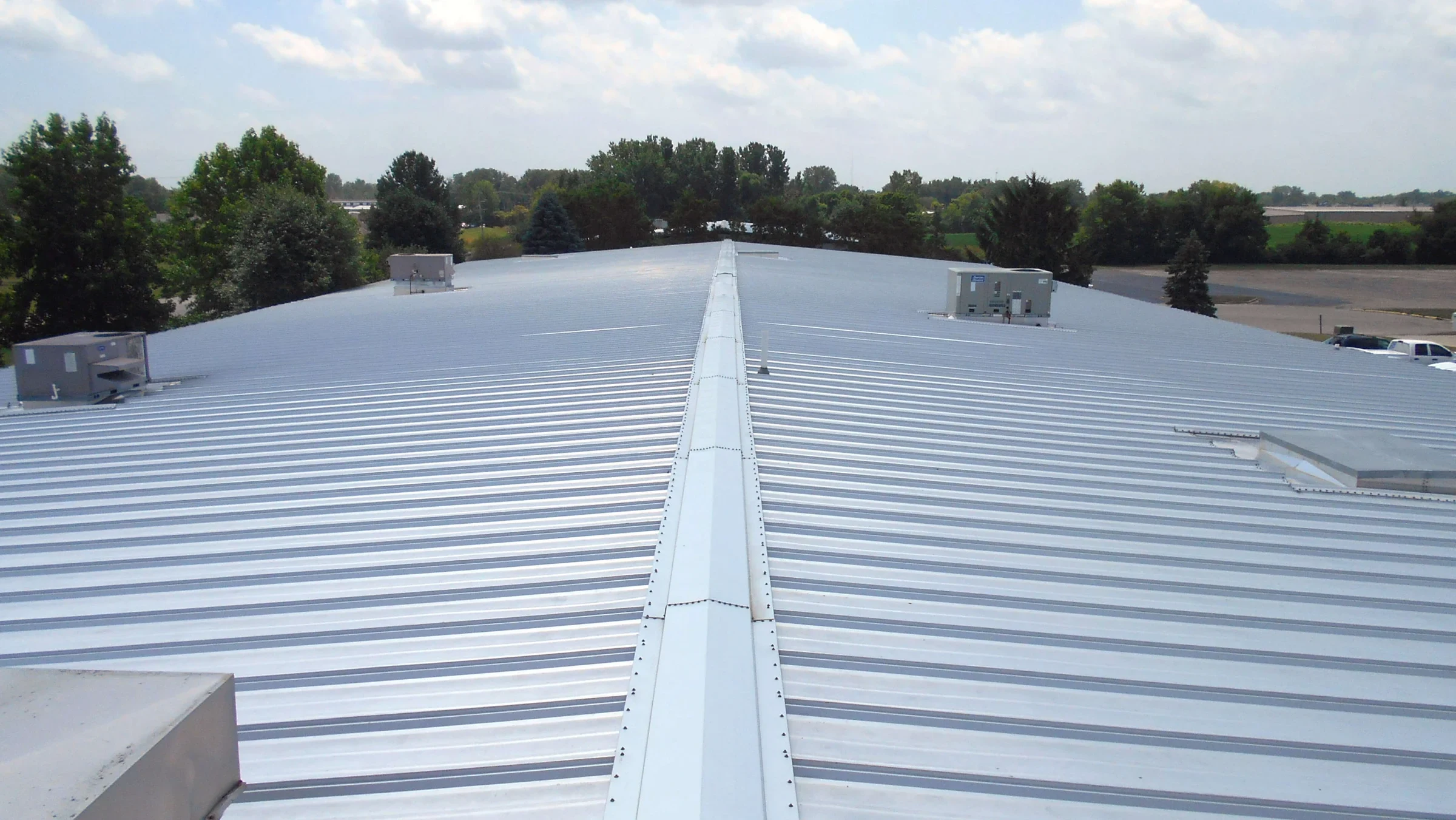
We can bid strictly to spec, or we can come back with alternates if a design team or ownership group is looking at value engineering options. On projects where the spec calls for a standing seam metal roof on a visible entry canopy paired with a low-slope TPO membrane over the main roof, we'll price it as designed and flag anywhere a substitution might save real money without giving up performance.
We also stay involved through closeout. Warranty registration, as-built documentation, and manufacturer inspection sign-off are part of the scope, not a separate ask after the project is already closed out on paper.
Punch List and Warranty Handoff
A roof punch list is usually short if the tie-ins and flashing details were handled correctly the first time. We walk the roof with your superintendent before the final owner walkthrough, close out any open items, and hand over a complete warranty package so the building owner or property manager has documentation on day one, not three months later when they're chasing paperwork.
We also keep a copy of every submittal, inspection photo, and manufacturer sign-off organized by project, so if a warranty question comes up two or three years after closeout, we can pull the original documentation instead of asking the owner to track it down.
Bid-Build Versus Design-Build Roof Scopes
Some of the projects we bid come in as straight bid-build packages with a finished spec, and others come to us earlier as part of a design-build team still working through system selection. On design-build jobs, we're often brought in during early design to help the architect and owner weigh roof options against budget and building use before drawings are finalized.
That early involvement tends to prevent the kind of late-stage change orders that eat into a GC's margin, because roof drainage, insulation thickness, and attachment method get settled before steel is even ordered rather than getting revisited mid-construction when a conflict shows up.
Questions General Contractors Ask Us
Can you turn around submittals fast enough for a tight preconstruction schedule?
Yes. We know the drawing and product data requirements most manufacturers require for warranty submittals, and we keep that documentation ready so we're not the trade holding up your submittal log.
How do you handle roof tie-ins to an existing building you didn't originally install?
We inspect and document the existing membrane and flashing condition before detailing the transition, and we confirm manufacturer compatibility before committing to a tie-in method. If the existing roof condition is questionable, we tell you before it becomes a mid-project surprise.
Do you coordinate directly with mechanical and electrical subs on rooftop equipment?
We do, and we'd rather have that conversation before insulation goes down than after a curb lands in the wrong spot. Coordinating curb and penetration locations early saves rework for everyone on the roof.
What do you need from us to keep the roof schedule on track?
A dry, structurally complete deck, confirmed rooftop equipment locations, and a heads-up on any sequencing changes as early as possible. Most roof schedule slippage traces back to one of those three things changing late.
Will you price alternates if we need to value-engineer the roof scope?
Yes, we'll price the specified system and note where a substitution could reduce cost, along with any tradeoff in warranty term or performance so your team and the owner can make an informed call.