
Service Area
Assessment
Office
Buildings
Planning
Closeout


When a Roof Needs 80-Mil TPO Instead of the Standard Spec
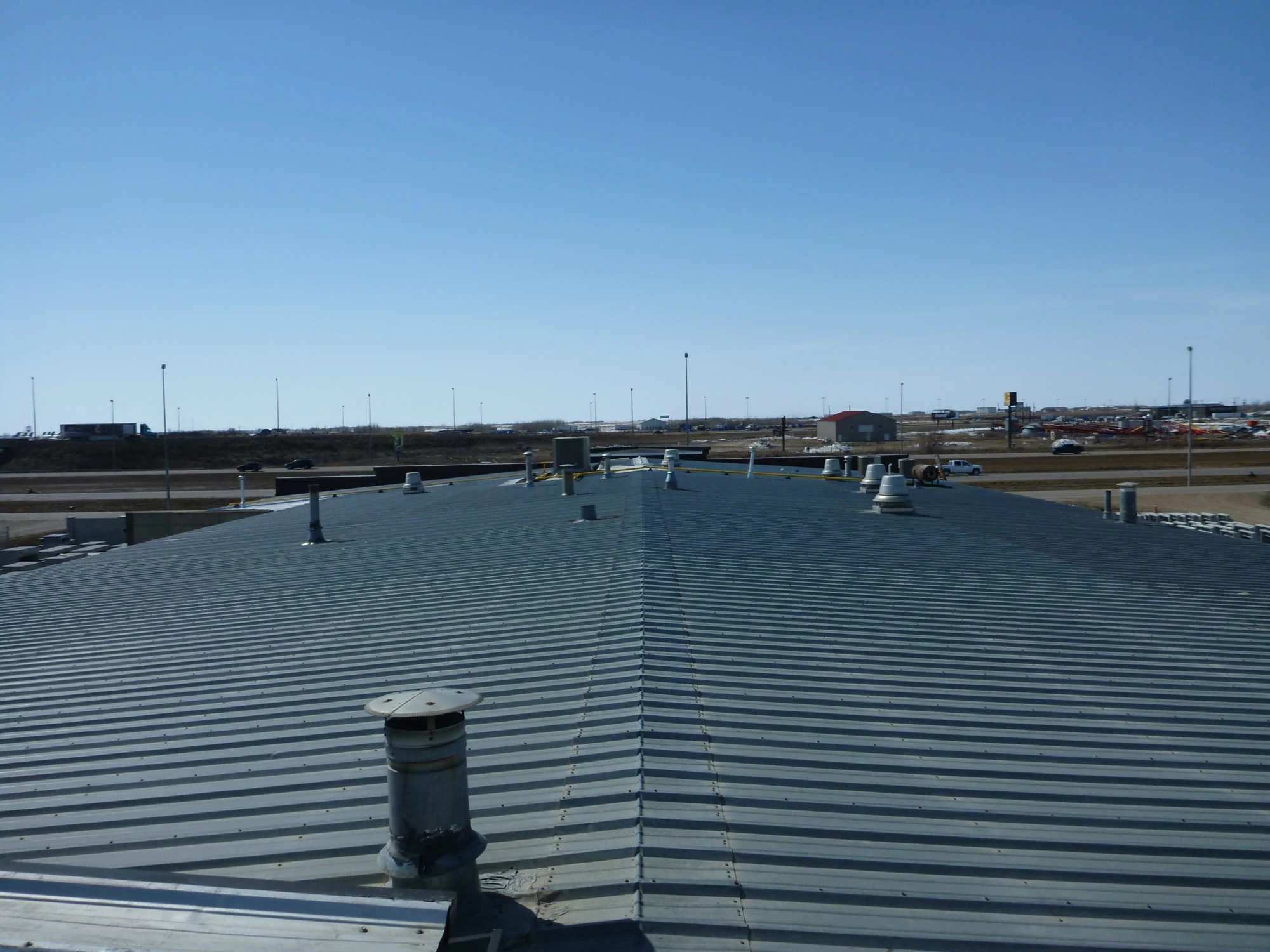
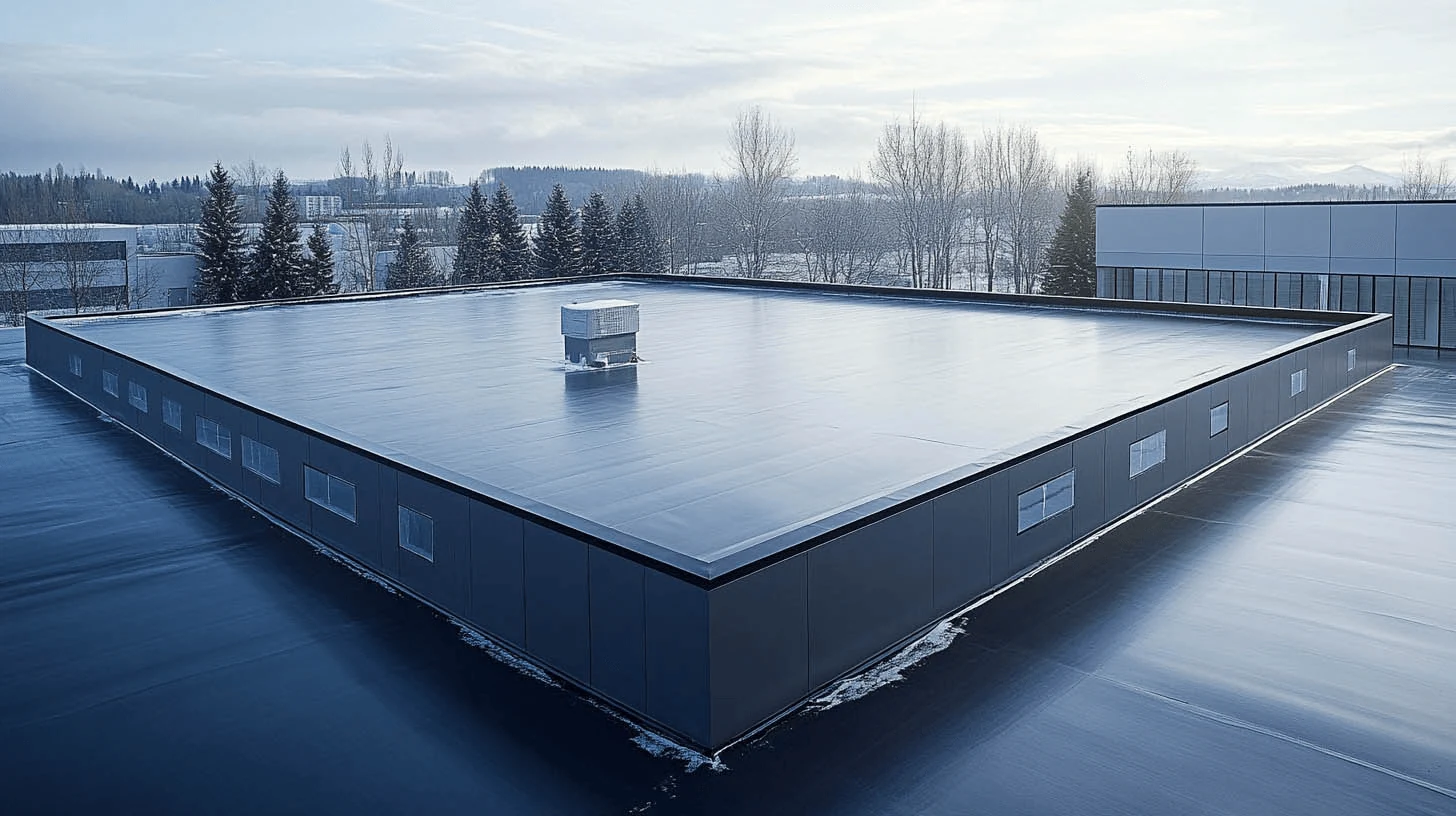
Some roofs across Stark County take more abuse than a standard membrane is built for — dense mechanical equipment, frequent contractor foot traffic, or a history of punctures the maintenance log keeps repeating. That's where 80-mil TPO earns its higher price per square, and where we push back if a customer wants to downgrade to save money on a roof that doesn't fit the lighter spec.
What the Extra 20 Mils Actually Buys
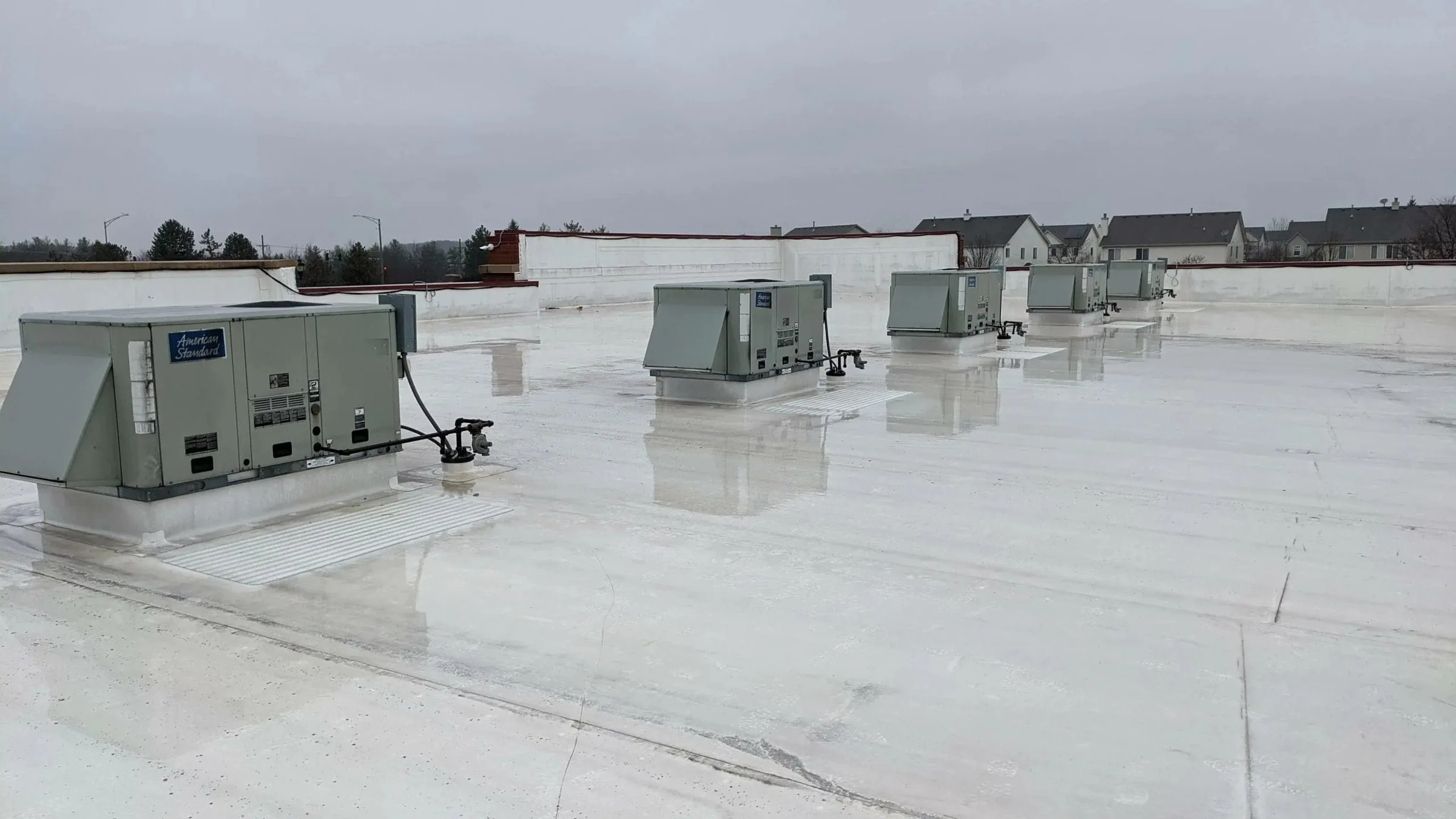
The jump from 60-mil to 80-mil isn't a marginal upgrade — it's roughly a third more material thickness, and it shows up directly in puncture and impact resistance. On a manufacturing plant roof carrying multiple rooftop units, dust collectors, and the ladders and toolboxes that come with servicing them, that thickness is the difference between a membrane that shrugs off a dropped wrench and one that needs a patch.
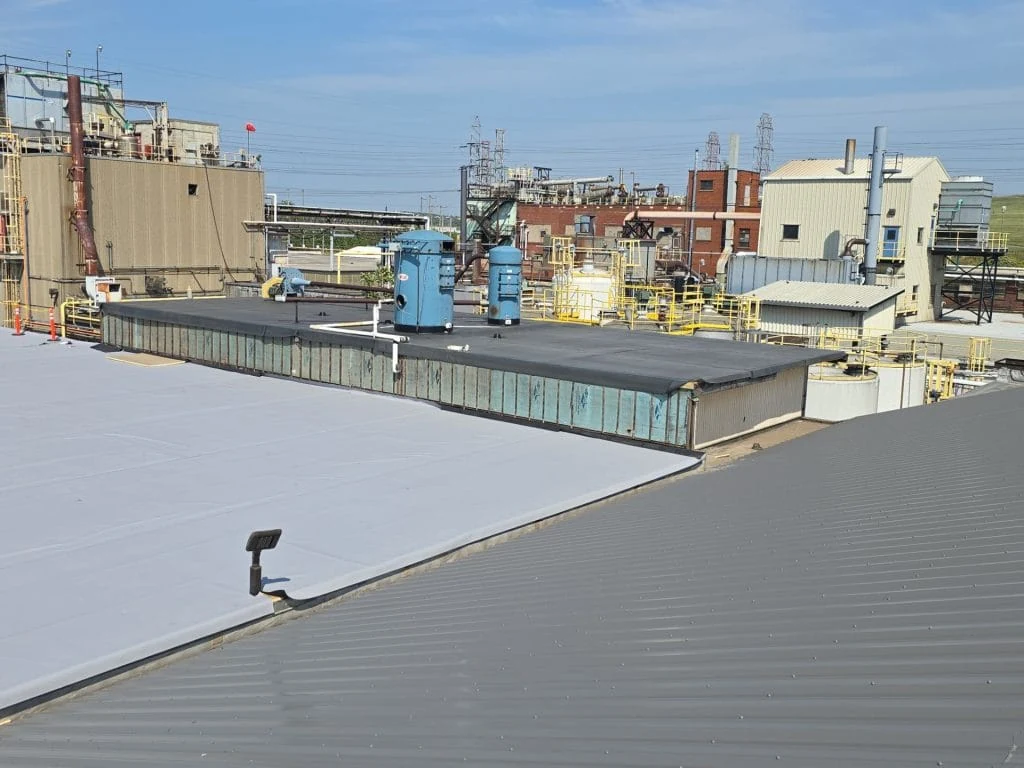
We see the clearest case for 80-mil on older Timken-era industrial buildings around Canton where decades of additions left the roof with a maze of curbs, stacks, and equipment platforms. More penetrations mean more foot traffic funneled through tight zones, and that's exactly where thinner membranes wear first.
Hail and Wind Load in Stark County
Spring storm season brings hail to this part of Ohio most years, and while TPO in general handles hail better than aged EPDM or brittle old built-up systems, thickness still matters for impact resistance on marginal-slope roofs where hail can bounce and re-strike. On buildings we've serviced after a hail event, 80-mil roofs consistently show less membrane bruising than 60-mil roofs of similar age, even when both were installed correctly.
Wind uplift performance is a separate engineering question tied to attachment pattern and fastener spacing more than membrane thickness alone, but the added mass and tear resistance of 80-mil gives an extra margin on exposed rooflines — corners and perimeter zones especially, where wind pressure concentrates.
Where the Cost Actually Pencils Out
We won't tell an owner to spec 80-mil across an entire roof if only a third of it sees real traffic. The more common approach on a plant reroof is 60-mil across the bulk of the field with 80-mil or a walkway pad system concentrated around rooftop units, access hatches, and equipment platforms — the zones where techs actually walk.
- Full-roof 80-mil — buildings with roof-mounted process equipment, dense mechanical racks, or heavy service traffic across most of the roof area
- Zone upgrade to 80-mil — targeted around HVAC clusters, access hatches, and known high-traffic paths
- Walkway pad over 60-mil — cheaper alternative that protects defined traffic lanes without upgrading the whole field
- 80-mil at roof edges and corners — added margin where wind pressure is highest on exposed buildings
Cost Delta and Lifecycle Thinking
Expect 80-mil to run noticeably higher per square than 60-mil, mostly in material cost since labor to install is comparable. Where it pays off is in avoided service calls — every puncture repair is a work order, a technician dispatch, and in some cases a tenant complaint if water gets into occupied space below. For a roof with a documented pattern of punctures, the lifecycle math usually favors the heavier membrane even at the higher upfront cost.
We build that comparison into the proposal rather than just quoting a price, because the FM signing off on the capital request needs the traffic and repair history to justify the spend to ownership.
Retrofit Considerations at Belden Village and Similar Retail Sites
Big-box retail roofs around Belden Village carry a different traffic pattern than manufacturing plants — fewer penetrations, but often multiple tenant HVAC units serving subdivided space, each with its own service contractor visiting on a different schedule. That uncoordinated traffic is another case where 80-mil, or at minimum walkway protection near each unit, keeps the membrane from taking repeat hits from crews who don't know the roof.
We flag this during pre-bid walks because owners with multi-tenant retail roofs often underestimate how much foot traffic several independent service contractors add up to over a year.
Questions FMs Ask Before Approving the Upgrade
Is 80-mil TPO worth it on a roof with only two rooftop units?
Usually not across the whole roof. We'd more likely recommend 60-mil in the field with 80-mil or walkway pads concentrated around those two units and the path techs take to reach them.
Does 80-mil TPO need a different attachment method than 60-mil?
No, the same mechanically attached, fully adhered, or induction-welded options apply. The membrane is heavier and slightly stiffer to handle during install, but the attachment engineering doesn't change because of thickness alone.
How much longer does 80-mil actually last compared to 60-mil?
Service life is driven more by installation quality, UV exposure, and traffic than by mils alone, but on high-traffic roofs the added thickness measurably delays the point where punctures start showing up, which is often what ends a roof's useful life before the membrane itself wears out.
Can you tell from a roof inspection whether 60-mil is undersized for a building?
Yes — the maintenance history tells the story. Repeat patch locations, foot-traffic wear patterns visible in the membrane sheen, and clustered equipment all point to a roof that would benefit from the heavier spec on its next reroof.
Does hail damage show differently on 80-mil versus 60-mil?
Both can bruise under significant hail, but 80-mil generally shows less membrane displacement and fewer full punctures from the same size hail, based on the post-storm inspections we've run across Stark County.