
Service Area
Assessment
Office
Buildings
Planning
Closeout

Reflective EPDM: A Cooling-Cost Conversation for Canton Owners
White EPDM doesn't come up nearly as often as black in our Stark County estimates, but for the right building it solves a problem black membrane can't. If tenants are paying the electric bill and rooftop HVAC is running hard through a Canton summer, reflectivity starts mattering more than material cost per square.
Same Rubber, Different Surface
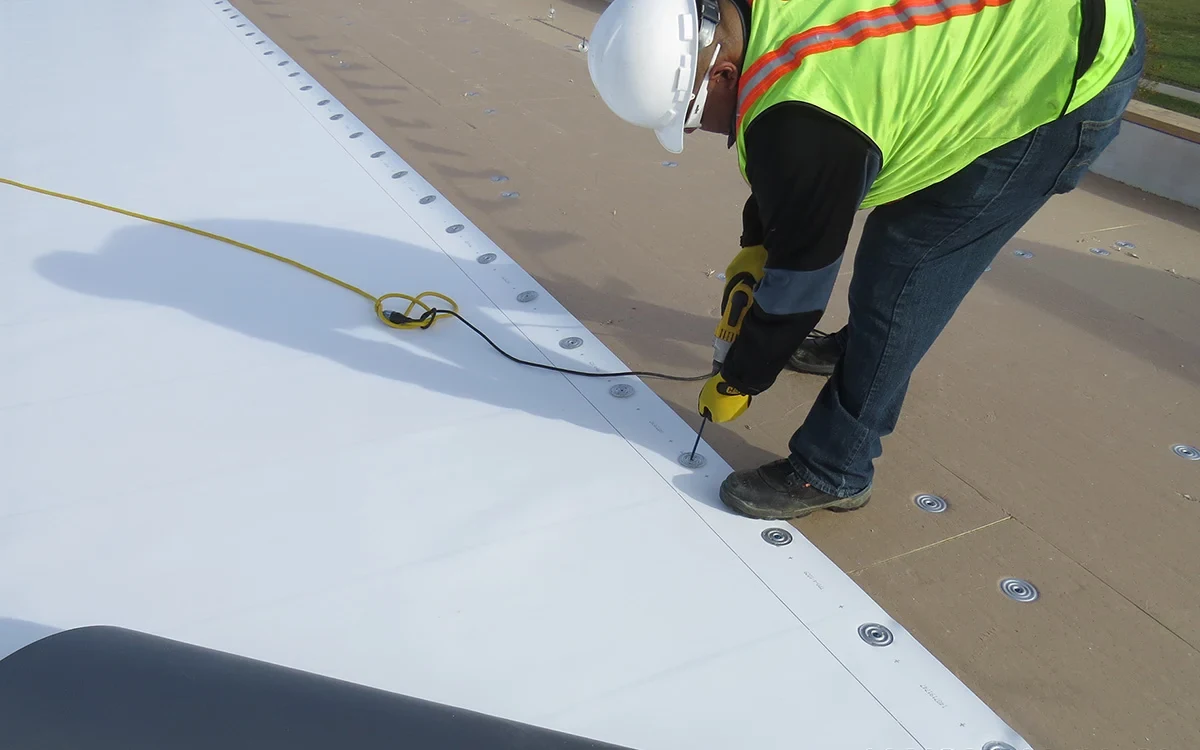
White EPDM is chemically the same synthetic rubber as the black version — the difference is a white pigment layer or laminate on the exposed face. Some manufacturers produce it as a co-cured white-on-black sheet, which gives installers flexibility to expose either side depending on the job. The underlying material properties — flexibility in cold weather, tear resistance, seam chemistry — carry over from black EPDM, so the maintenance and seam-repair conversation is largely the same one we have on black roofs.
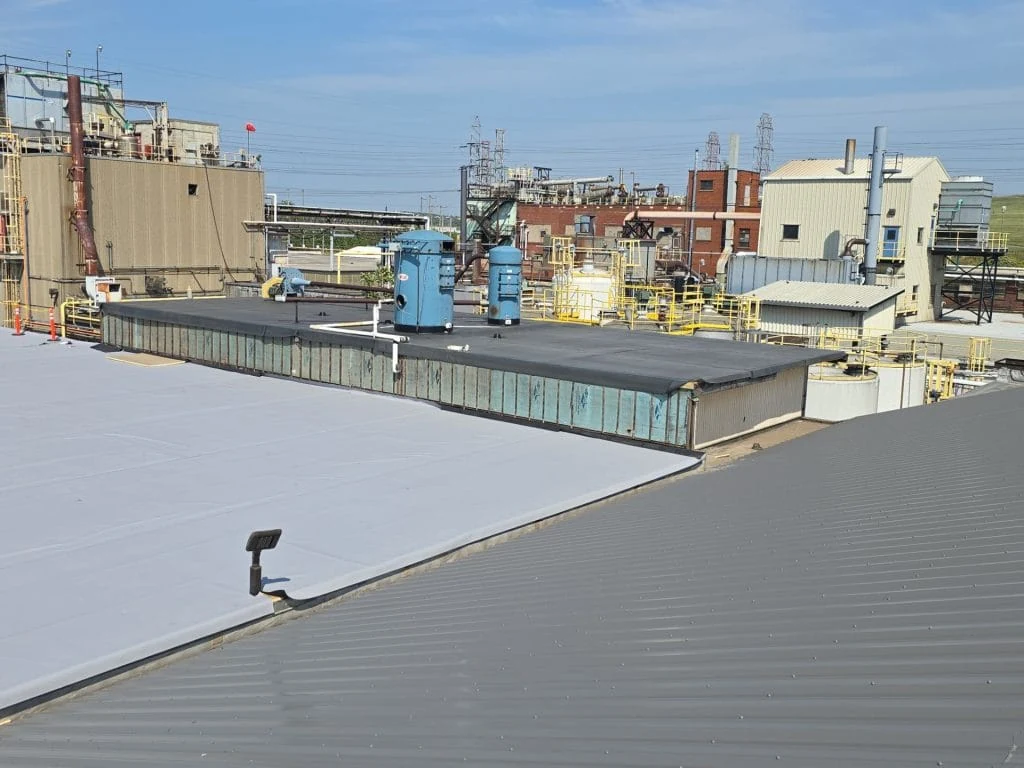
What changes is surface temperature. On a July afternoon, a black EPDM roof can run 50 to 60 degrees hotter than ambient air temperature. White EPDM stays much closer to ambient. That gap is the entire reason to spend more on the reflective option.
Where the Energy Case Actually Holds Up
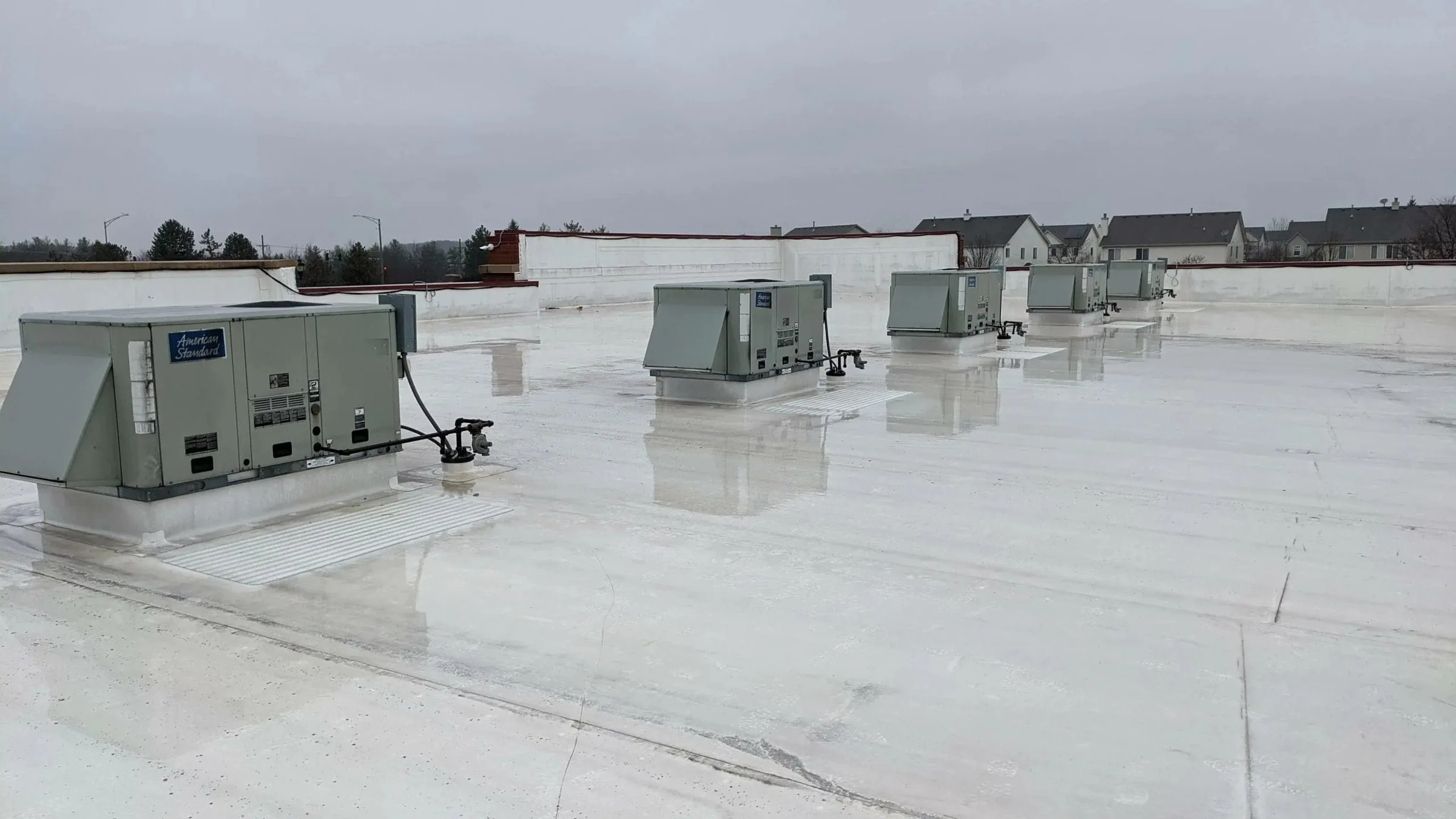
We tell owners the truth on this one: reflectivity only pays for itself where there's conditioned space directly below the roof driving real cooling cost. A retail space at Belden Village or an office suite in Plain Township with rooftop package units running all summer is a good candidate. An unconditioned manufacturing floor or a warehouse with no HVAC below the roof deck won't see the same payback, because nobody's paying to cool that air in the first place.
For multi-tenant buildings where different sections have different conditioning, we've spec'd white EPDM over the occupied, conditioned portions and left black EPDM or another lower-cost system over unconditioned warehouse space in the same structure. It's not an all-or-nothing decision.
Winter Tradeoffs Worth Knowing
The same reflectivity that helps in summer works against you slightly in winter. A white membrane sheds less snow through passive heat absorption than black does, so light snow can sit a little longer on a reflective roof. In practice this rarely causes problems on a properly drained roof, but it's part of the honest tradeoff conversation rather than a one-sided sales pitch for reflective membrane.
Installation and Seam Considerations
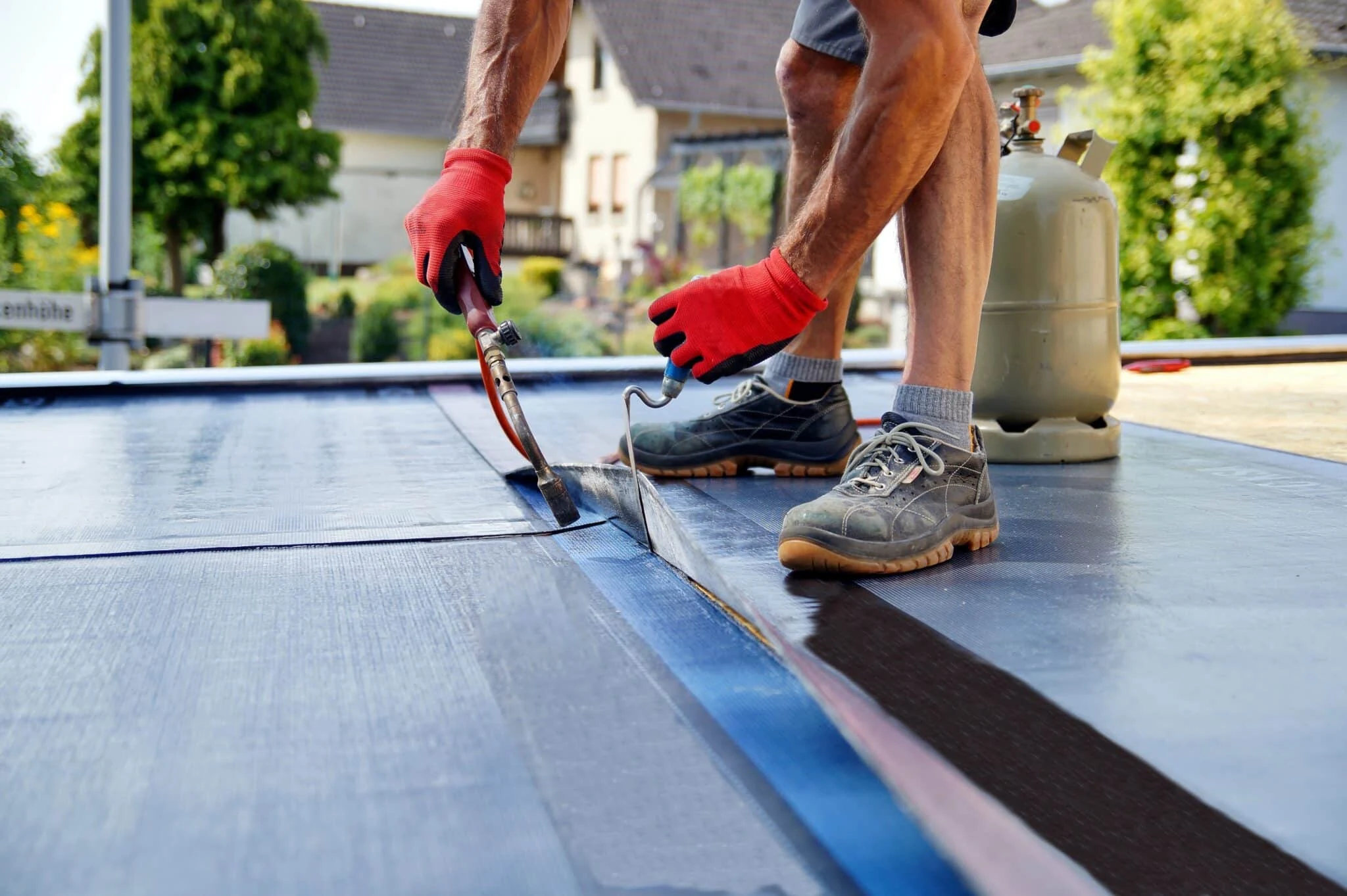
Seaming methods for white EPDM mirror black EPDM — taped or adhered laps rather than the hot-air welds used on TPO. That means the same long-term maintenance profile applies: seams are the part of the system that ages fastest and needs periodic inspection, regardless of surface color. We don't sell white EPDM as lower-maintenance than black; the only real difference is thermal performance.
- Reflective surface reduces rooftop surface temperature significantly compared to black membrane
- Best fit for buildings with conditioned space directly below the roof deck
- Same field material and seam chemistry as black EPDM — same repair and inspection needs
- Can be combined with black EPDM across zones of the same building based on what's conditioned below
- Slightly slower snow-shed than black membrane during light winter events
Comparing Cost Against TPO
Reflective TPO is the more common white membrane choice on new commercial roofs today, largely because welded seams have taken over the market. We still recommend white EPDM in specific situations — recover jobs over existing EPDM systems where matching material simplifies the tie-in, or projects where the fully-adhered EPDM installation method fits the deck better than a TPO attachment approach. It's a narrower use case than it used to be, but not an obsolete one.
We'll walk through both options on any bid where reflectivity is the goal, because the right answer depends on the existing roof condition as much as the new membrane choice. On a recover job specifically, sticking with EPDM rather than switching membrane families often means less demolition, since the existing insulation and attachment method are already proven compatible with the rubber system going back on top.
Fully-adhered EPDM also handles irregular deck surfaces a little differently than a welded system does, which can matter on older buildings where the deck has settled unevenly over the decades. We factor that into the recommendation rather than defaulting to whichever membrane is more common on new construction.
Questions Owners Ask About Reflective Roofing
Will white EPDM actually lower my summer electric bill?
If there's conditioned space below the roof and the current membrane is dark and aged, switching to a reflective system typically reduces rooftop heat gain measurably. How much that translates to dollars depends on your HVAC system's efficiency and how much of the building is actually conditioned.
Does white EPDM show dirt and staining more than black?
Yes, noticeably. Reflective membranes pick up visible soiling faster than black, which can reduce reflectivity over time if the roof isn't periodically cleaned. It's a maintenance item worth planning for, not a defect.
Can you install white EPDM over an existing black EPDM roof?
In some cases, if the existing membrane, insulation, and deck pass inspection. We check moisture content and overall condition before recommending a recover over a full tear-off.
Is white EPDM more expensive than black?
Typically yes, by a modest amount per square. Whether that premium is worth it comes down to how much conditioned space sits under the roof and how long the building is expected to stay in service.
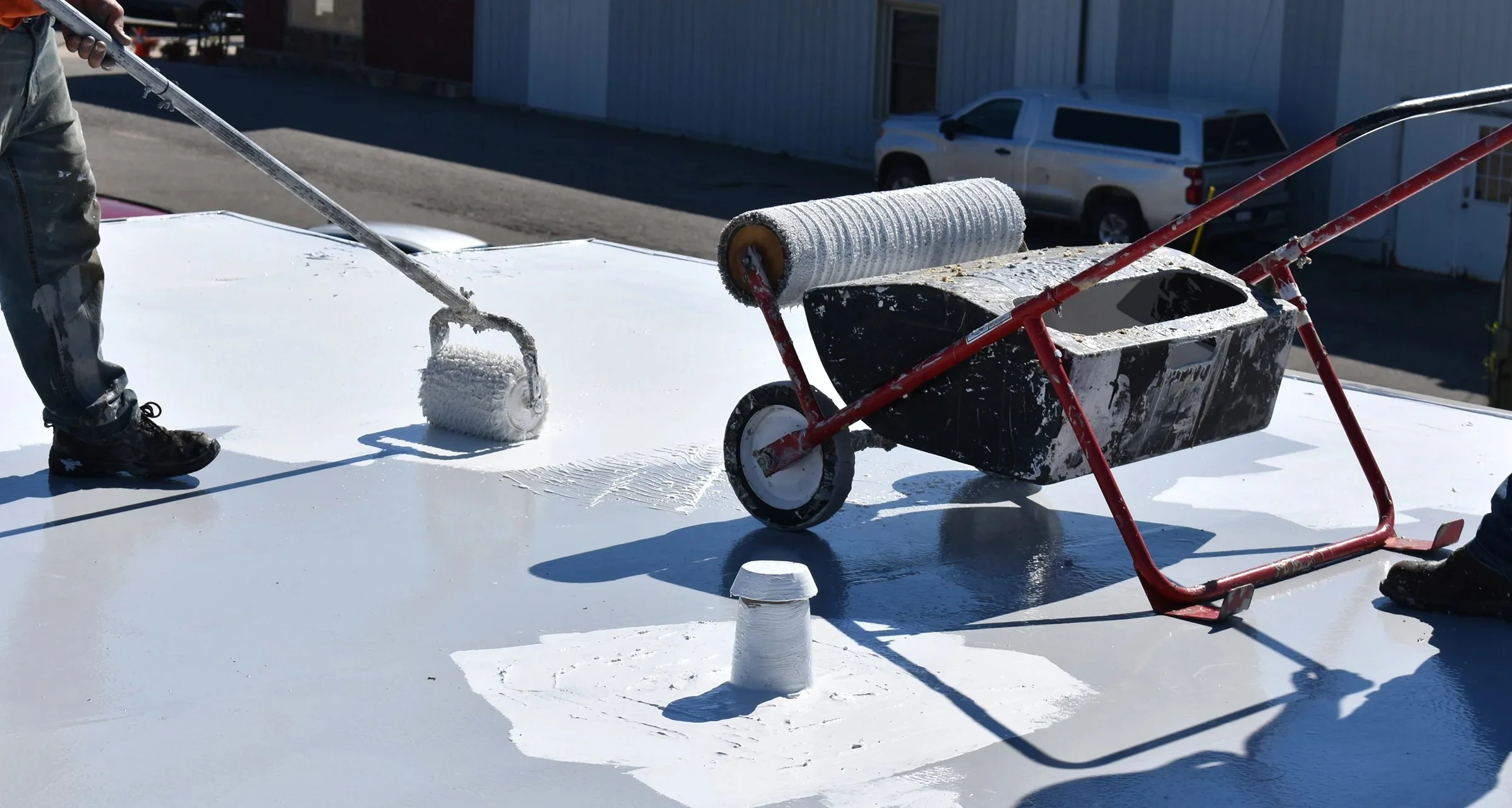
How does white EPDM compare to a silicone coating over an existing dark roof?
Both raise reflectivity, but they solve different problems. A new white EPDM membrane replaces the roofing system outright; a silicone coating restores and extends an existing roof's life without full replacement. We'll recommend whichever fits the roof's actual condition and your capital timeline.