
Service Area
Assessment
Office
Buildings
Planning
Closeout
Black EPDM on Canton's Manufacturing-Era Roof Stock
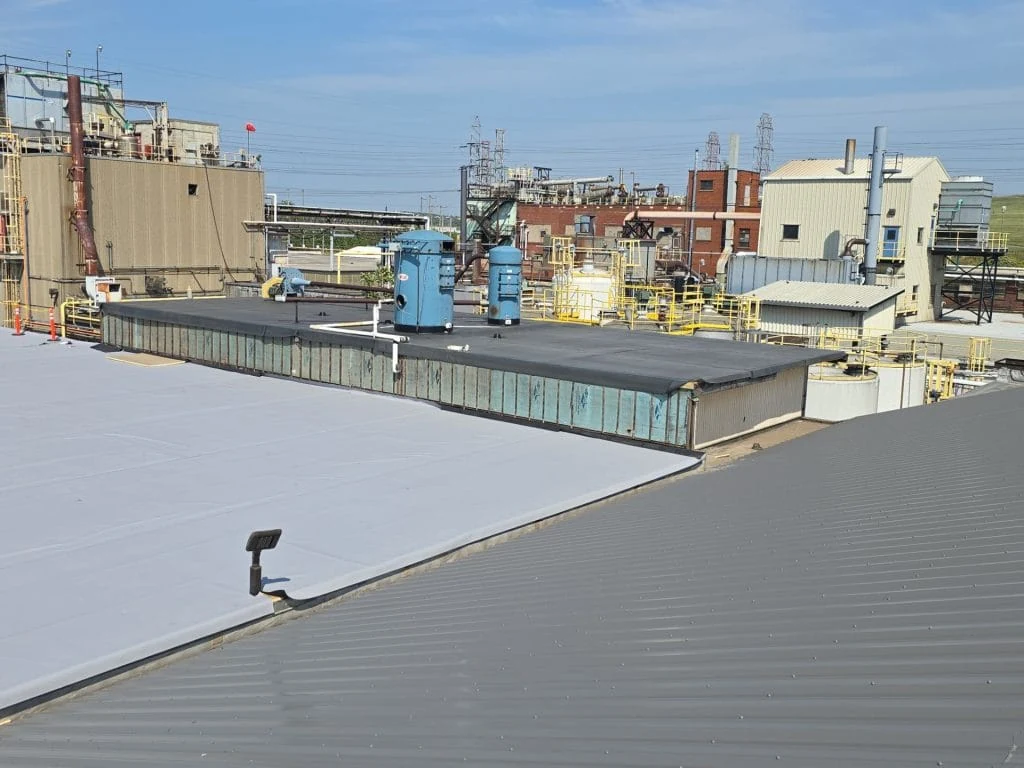
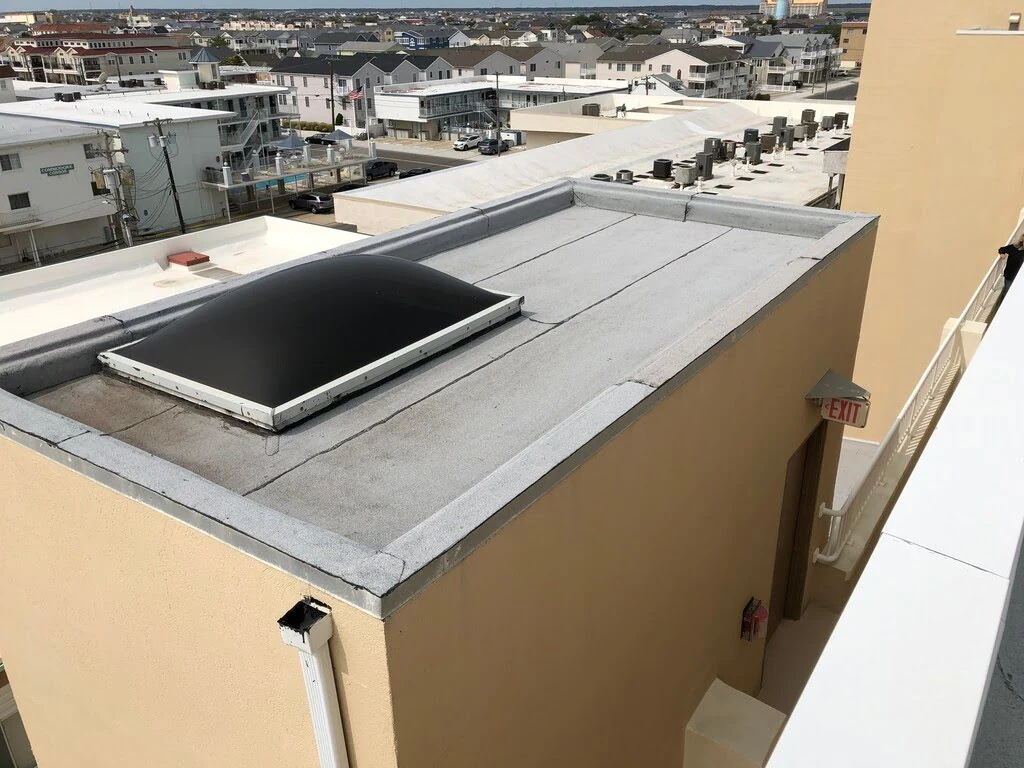
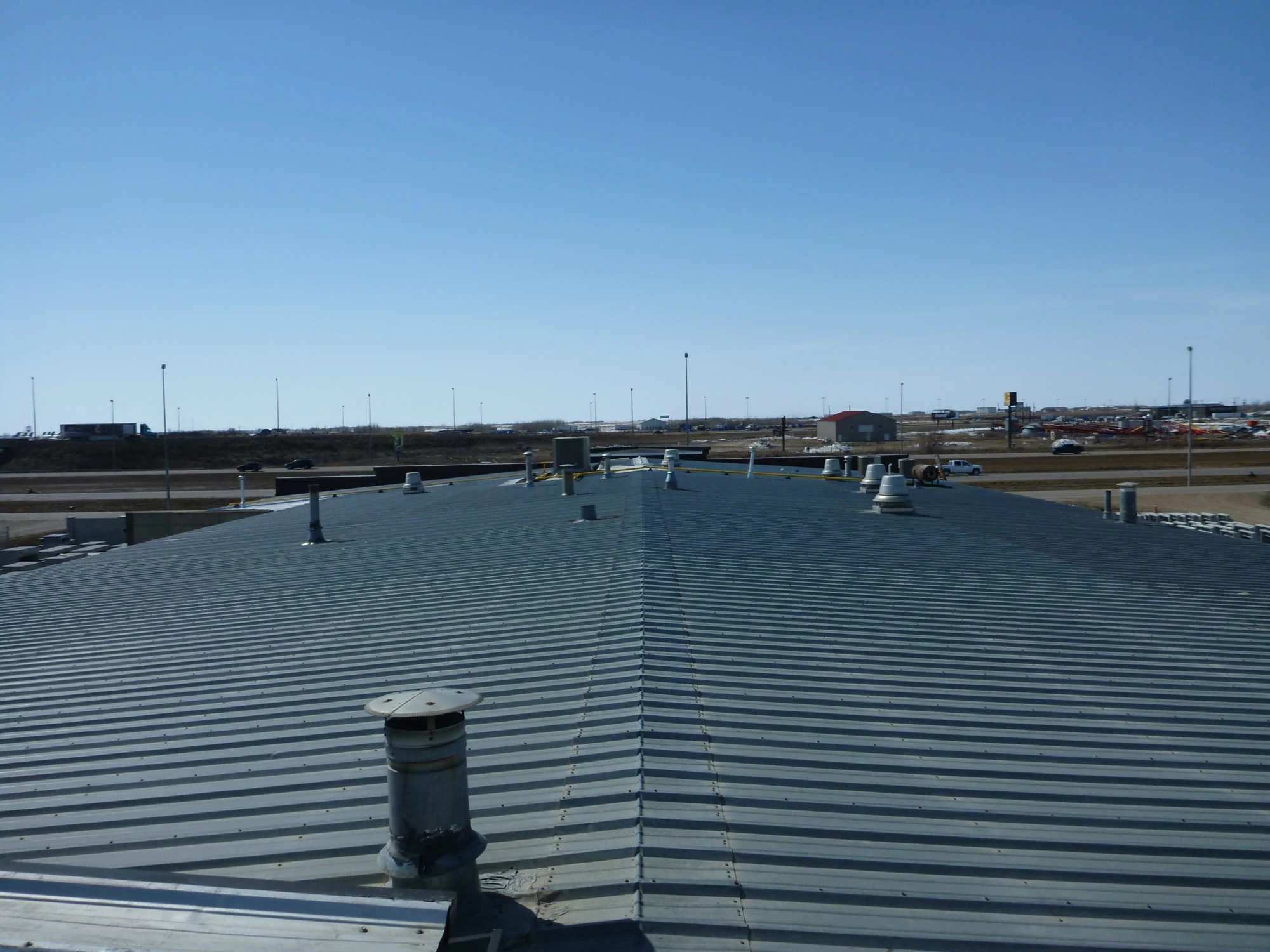
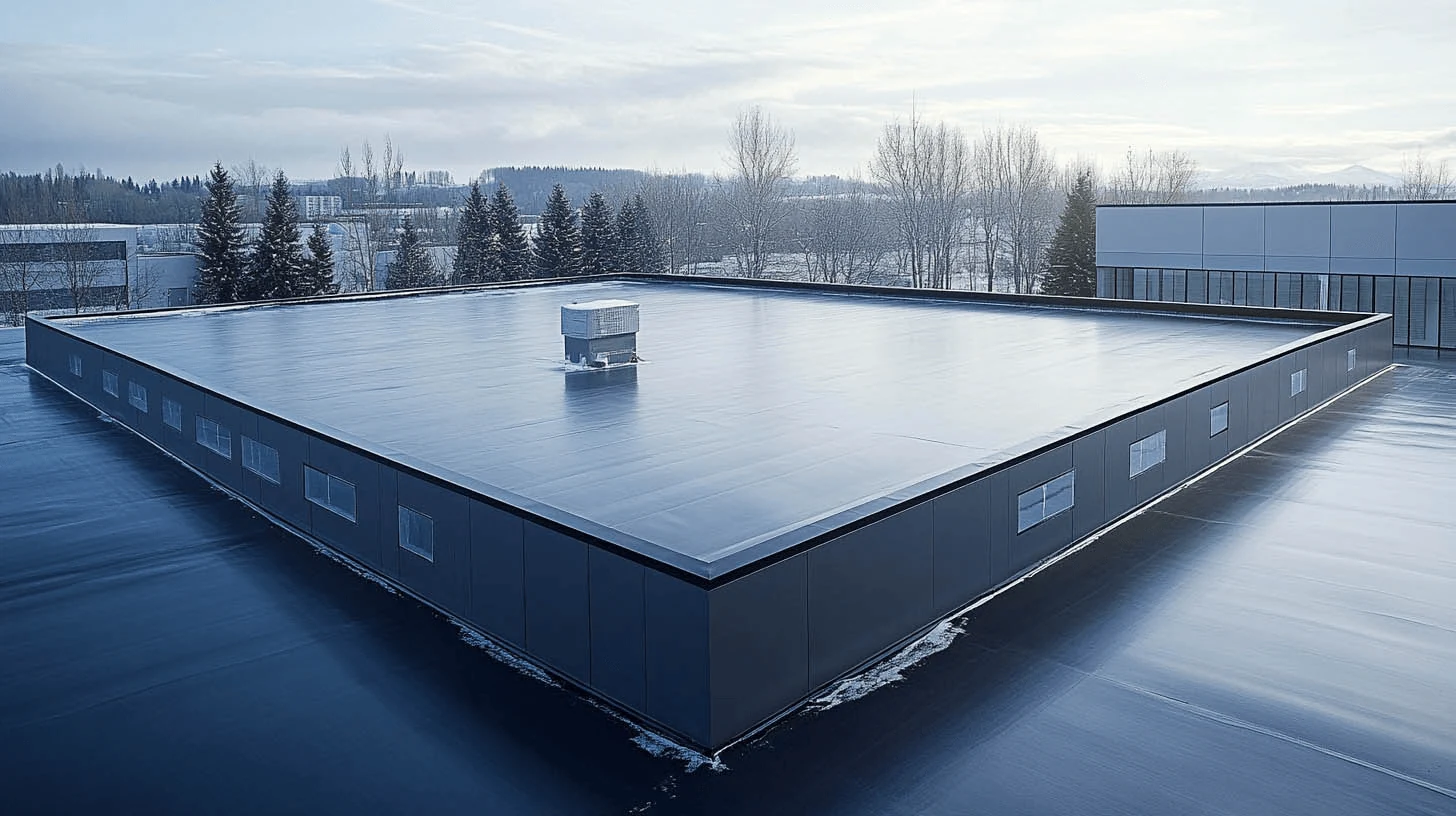
A lot of the older manufacturing and warehouse buildings we service around Canton and Massillon still carry black EPDM, some of it original to a roof installed decades ago. It's a system we understand well because we spend more time repairing and recovering it than installing it new these days — and knowing where it holds up and where it's failing shapes how we advise owners on the next capital decision.
Why So Much of the Region's Roof Stock Is Still EPDM
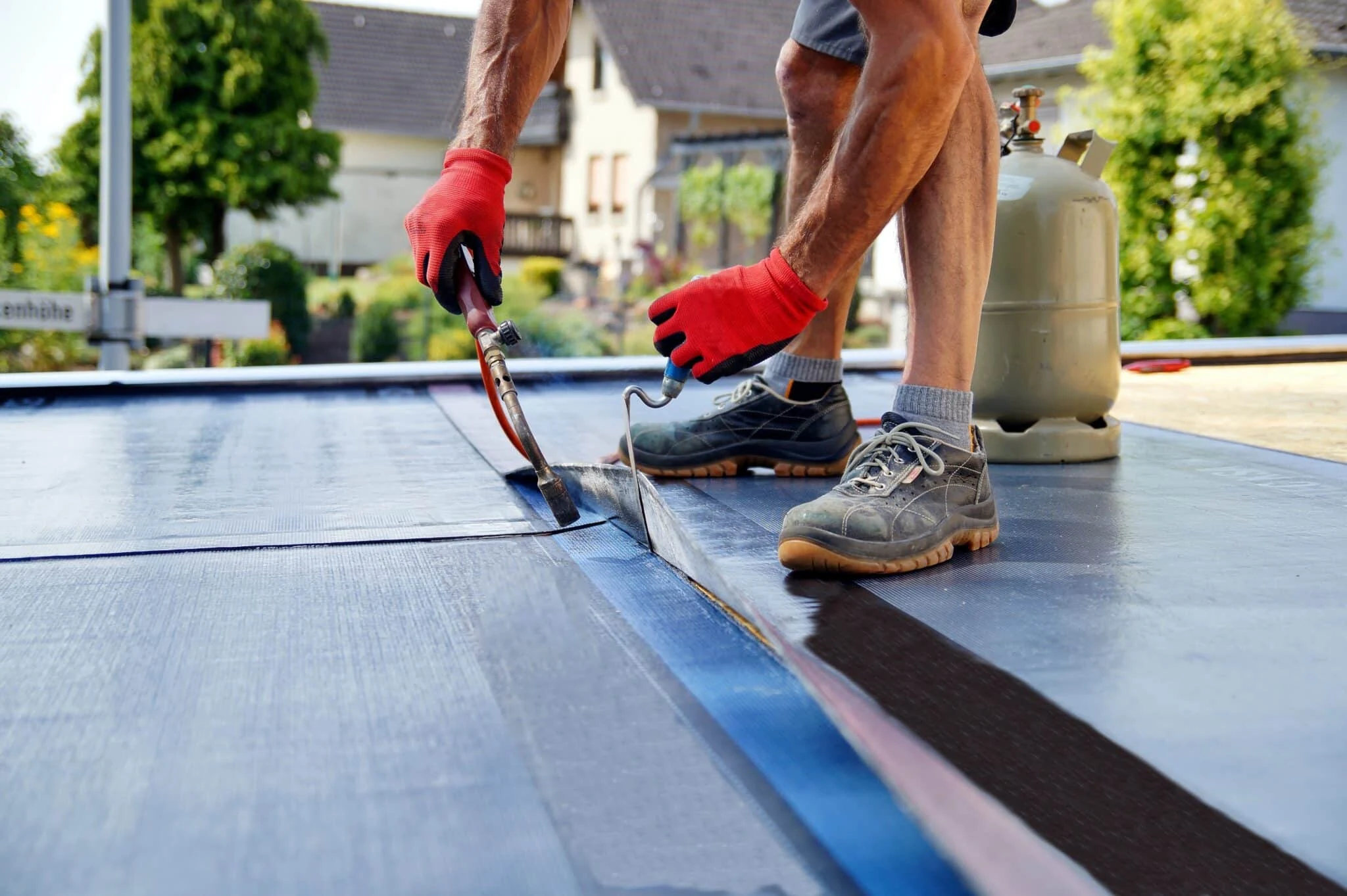
Black EPDM rubber was the default single-ply membrane through the 1980s and 90s, and Stark County's manufacturing boom left a lot of buildings from that era with EPDM roofs that are now thirty-plus years old. Unlike TPO, which welds its seams, older EPDM installations typically used glued lap seams or seam tape, and that's usually the first place these roofs start to fail — not the membrane field itself, which can stay flexible and intact for a surprisingly long time.
We still find EPDM in good working condition on buildings where the seams were installed well and the roof has had basic maintenance. On roofs where seams were neglected, water tracks under the membrane long before there's a visible leak inside the building.
How Black Membrane Behaves Through Ohio's Temperature Swings
Black EPDM absorbs heat, which has tradeoffs. In winter, that absorbed heat helps shed light snow faster than a reflective white membrane would, and it keeps the rubber more flexible during Canton's coldest stretches, reducing brittleness at seams and flashings. In summer, the same heat absorption pushes roof surface temperatures well above ambient, which increases cooling load on conditioned space below and accelerates membrane aging through thermal cycling.
For an unconditioned manufacturing floor or warehouse, that summer heat gain matters less — nobody's paying to cool the space, so black EPDM's main downside doesn't apply the same way it would on an office or retail building.
Seam Repair Versus Full Replacement
Most of our EPDM service calls in Stark County are seam repairs, not membrane replacement. A failed lap seam is a targeted fix — clean, prime, and re-tape or re-adhere the joint — and it's a fraction of the cost of a reroof. We check every seam on the roof during that visit, not only the one that leaked, because if one seam has failed from age or poor original installation, others nearby are usually close behind.
- Seam re-taping or re-adhesion — addresses the most common EPDM failure point directly
- Flashing repair at curbs and penetrations — second most frequent failure location on older roofs
- Patch repair over isolated punctures or splits — quick fix for mechanical damage
- Full recover or tear-off — reserved for roofs with widespread membrane degradation, not isolated seam issues
Ponding Water on Low-Slope Legacy Decks
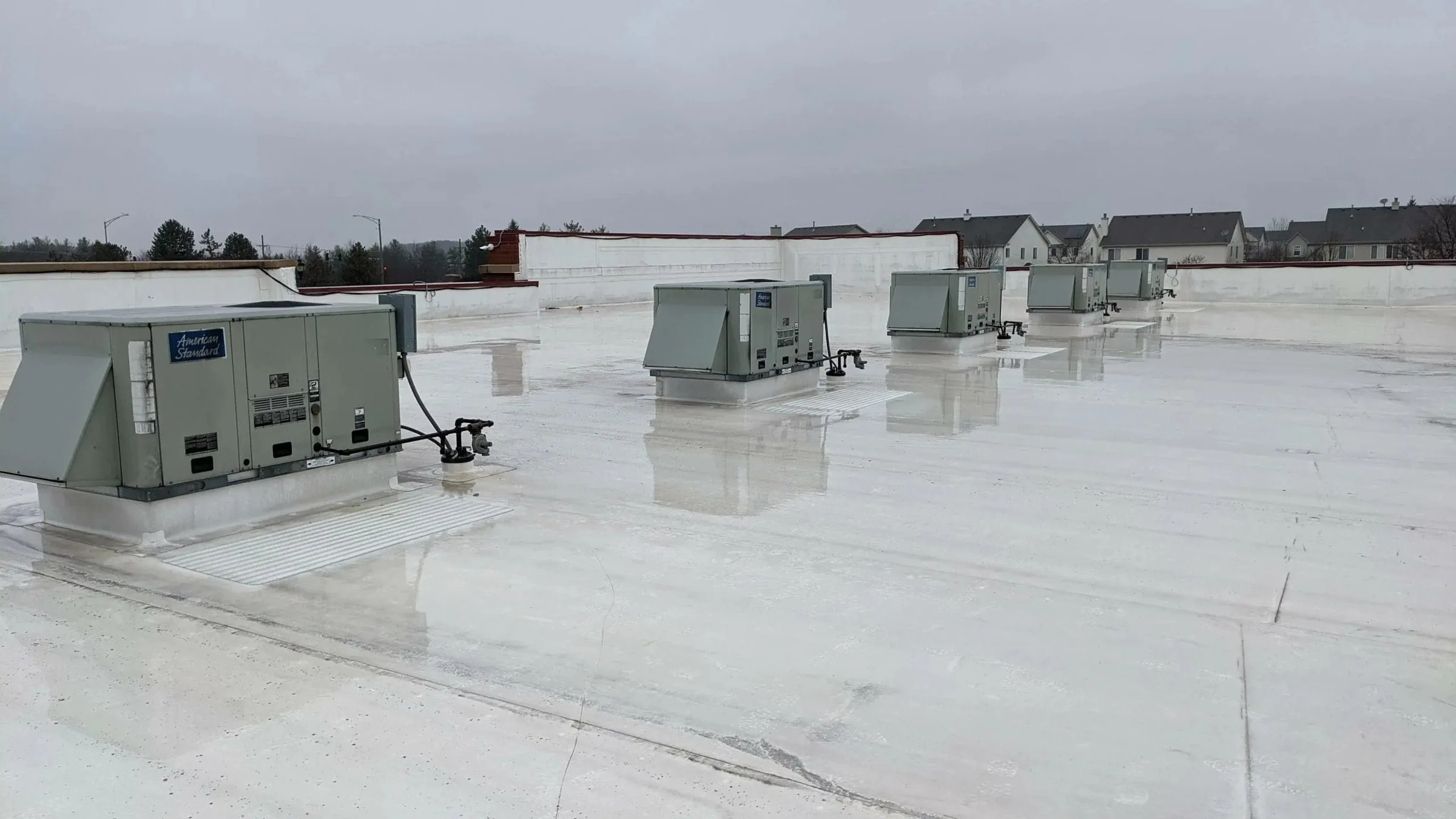
A lot of the manufacturing buildings from Canton's industrial-era construction boom have minimal roof slope by modern standards, and EPDM roofs on those decks develop ponding areas over time as the deck settles slightly or drains get partially blocked. Standing water isn't automatically a failure condition for EPDM — the membrane itself tolerates ponding better than some systems — but it accelerates seam degradation at any lap that sits under water regularly, and it's worth correcting drainage before it becomes a bigger problem.
We map ponding locations against the drain layout during inspections and flag which areas are candidates for tapered insulation correction versus just keeping an eye on it.
What This Means for Capital Planning
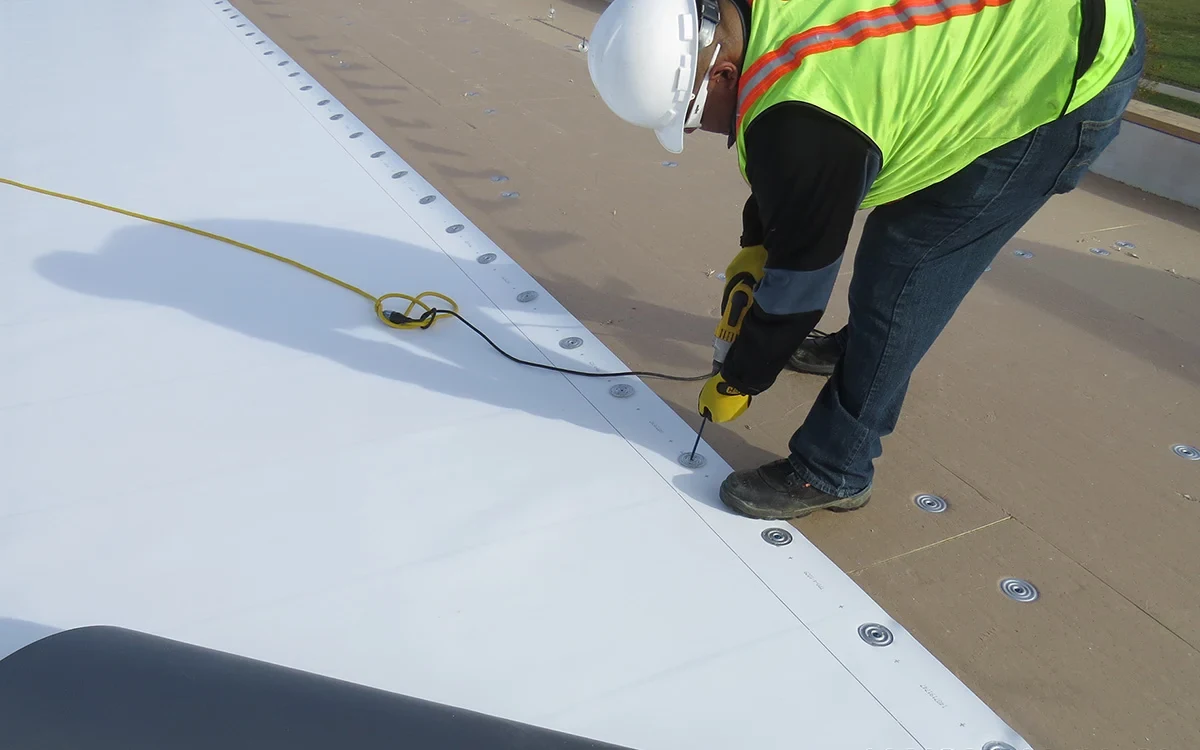
For a lot of the FMs we work with, the question isn't whether to replace an EPDM roof this year — it's how many more years of seam repair and targeted maintenance the roof has left before a full reroof becomes the better spend. We give straight answers on that, including when we think continued patching is throwing money at a roof that's past the point of cost-effective repair.
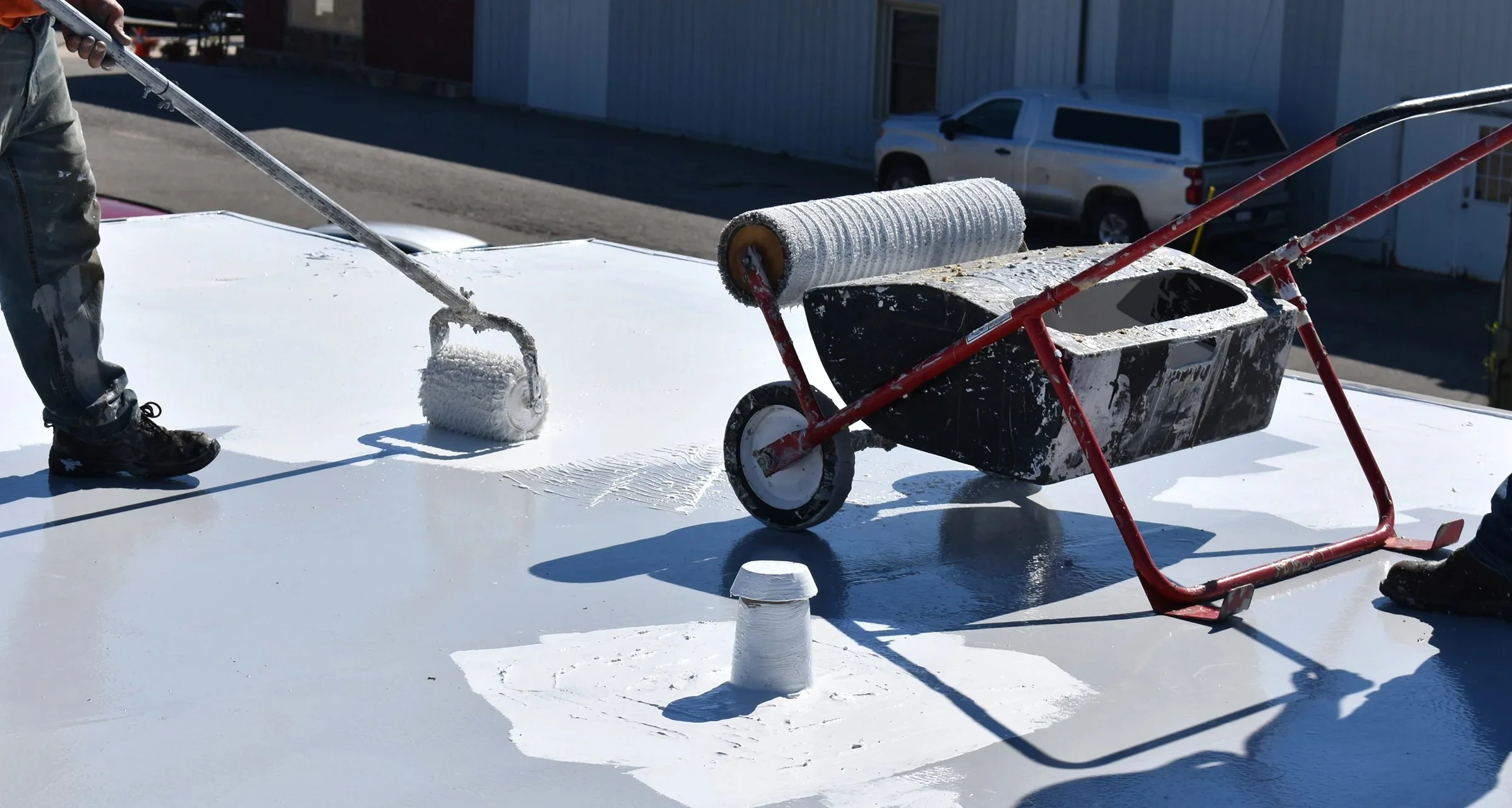
If the membrane field is still sound and it's really the seams and flashings driving repeat work orders, recover or restoration options are usually cheaper than tear-off and worth exploring before committing to full replacement.
Questions About Repairing Versus Replacing EPDM
How do I know if my EPDM roof needs seam repair or full replacement?
We look at how much of the membrane field itself is degraded — cracking, brittleness, or thinning — versus how much of the problem is isolated to seams and flashings. Widespread field degradation points toward replacement; isolated seam failures point toward targeted repair.
Is black EPDM still a reasonable choice for a new roof, or is TPO always better?
It depends on the building. For unconditioned industrial space where reflectivity doesn't save real energy cost, EPDM's lower material cost and long field track record still make it a reasonable option, though we install more TPO on new work overall.
Why did my roof start leaking at the seams after twenty years with no problems?
Seam adhesives and tapes have a service life shorter than the membrane field itself, and freeze-thaw cycling accelerates that breakdown. Twenty years is actually a fairly typical point for seam-level issues to start showing up on an EPDM roof.
Can you repair EPDM in cold weather?
Within limits — most seam adhesives and tapes have minimum application temperatures, so winter repairs sometimes require tenting and heating the work area, or we schedule non-emergency repairs for a stretch of milder weather when possible.
Does ponding water mean my roof is failing?
Not by itself. EPDM tolerates standing water reasonably well. It becomes a real concern when ponding sits directly over a seam long-term, when it's getting worse each year, or when it's adding structural load the deck wasn't designed for.