
Service Area
Assessment
Office
Buildings
Planning
Closeout

Roofing for Canton's Bearing Plants, Foundries, and Machine Shops
Timken has been bending steel in Stark County longer than most of the buildings around it have existed, and the manufacturing base that grew up around it - bearing plants, foundries, forging shops, machine job shops feeding the automotive and heavy-equipment supply chain - all share the same problem on the roof. A plant roof does more than shed weather. It's a working deck loaded with dust collectors, exhaust stacks, scrubber ductwork, and thirty years of penetrations from equipment nobody documented on the original drawings.
What's Actually Sitting on the Roof
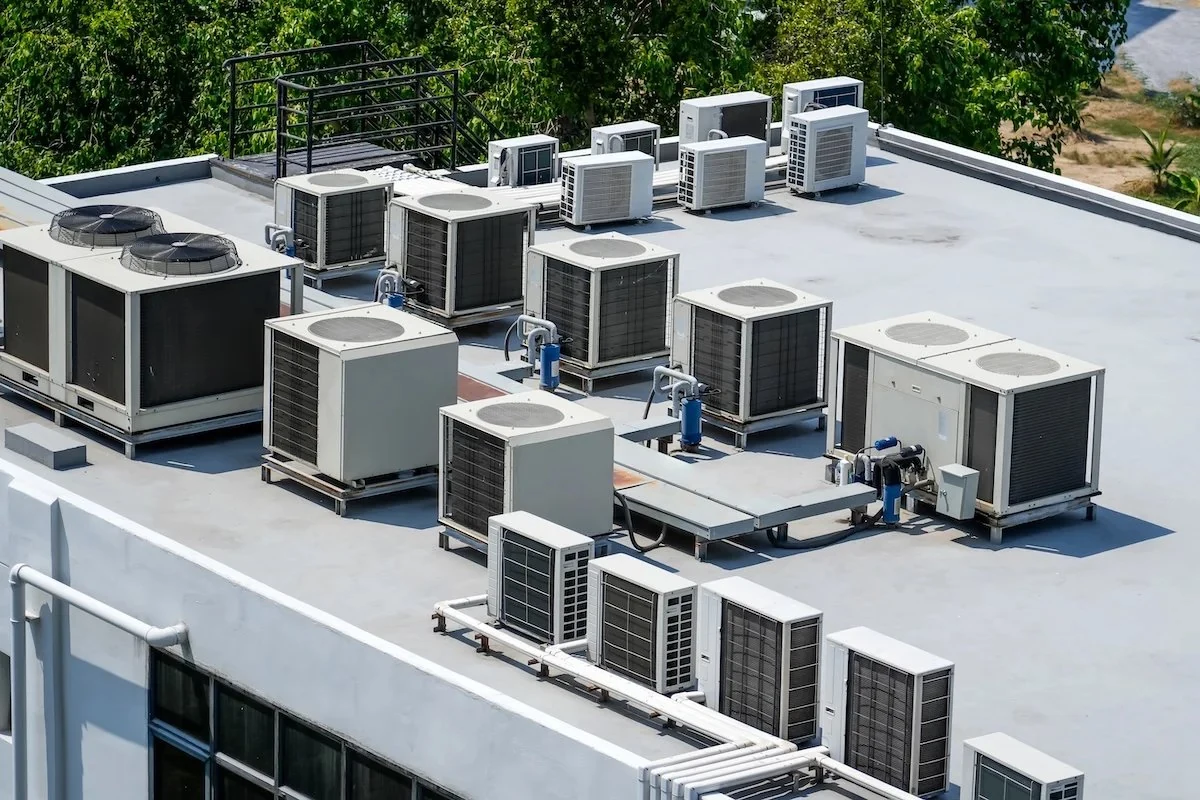
Walk a production roof in Canton and you'll find more curbs than field membrane in some sections. Baghouse ductwork, mist collectors for coolant vapor, roof-mounted exhaust fans tied to specific machine cells, gas lines feeding heat-treat furnaces below. Every one of those penetrations is a place where a membrane can fail first, and every one was probably added by a different contractor at a different time with a different flashing detail.
We map penetrations before we touch anything. That means walking the roof with the plant engineer or facilities manager, matching what's up top to what's running below, and flagging the curbs that were never properly flashed in the first place. On a building that's been through three expansions, that survey alone tells you more than a set of as-builts that stopped being accurate two additions ago.
Freeze-Thaw Cycling and What It Does to a 1970s Membrane
Stark County winters aren't the harshest in the state, but the freeze-thaw swing through late fall and early spring is exactly the cycle that ages an old built-up or modified bitumen roof faster than steady cold ever would. Water gets into a lap seam or a blister, freezes, expands, and works the seam open a little more each cycle. By the time you see a stain on the shop floor, that seam has probably been failing for two winters.
On plants running heat-treat or foundry operations, there's a second factor: heat rising off the process below keeps parts of the roof warmer than ambient, so you get uneven melt patterns and ice damming at transitions between hot and cold zones. That's not something you fix with more insulation everywhere - it's a roof-zone problem that needs to be diagnosed zone by zone.
Hot Work Near a Live Production Floor
Welding sparks, torch cutting, and grinding near roof penetrations are routine on an active plant roof, which means fire-resistant membrane selection and hot-work coordination with your EHS team aren't optional extras - they're part of scoping the job. We pull permits, coordinate lockout points with your safety staff, and use fire-rated systems in any zone where hot work happens above or near combustible process areas. A crew that treats a plant roof like a warehouse roof is a liability you don't need.
Signs a Plant Roof Is Past Managing
- Rust streaking or staining fanning out from equipment curbs and duct penetrations
- Standing water near roof-mounted additions where drainage was never re-graded
- Insulation gone soft or delaminated near steam or condensate lines
- Membrane punctures along forklift and cart paths on low-slope loading roofs
- Skylights over machine bays fogging, yellowing, or leaking at the frame
- Interior ceiling stains that show up two bays away from where the leak actually starts
Working the Job Around Your Shift Schedule, Not Ours
Most plants we work with don't have a slow season. There's a first shift, a second shift, sometimes a third, and a roof job that shuts down a production line for a day costs a lot more than the roofing itself. We stage material, schedule tear-off sections, and set containment so dust-sensitive processes - paint lines, clean assembly, anything running open product below - stay protected while we work overhead. Where a section needs full closure, we plan it into a weekend or a planned downtime window your operations team already has on the calendar.
Containment matters as much as the membrane spec on these jobs. A tear-off over an active machine cell needs debris netting and swept-clean handoffs at the end of every shift, not a tarp thrown over equipment and a promise to clean up Friday.
Additions Stacked on Additions
Plants that have grown in phases since the mid-20th century - and there are plenty of those scattered through Stark County - often carry two or three different roof systems on one building, tied together at transitions that were never quite matched. A 1960s built-up section meeting a 1990s single-ply addition meeting a machine-room curb added last decade creates drainage conflicts that no amount of patching solves permanently. We look at the whole roof as a drainage system first, then decide whether a targeted tear-off, a recover over the sound sections, or a phased full replacement makes sense for your budget and your production calendar.
What Plant Facilities Managers Actually Ask Us
Can you do the work without shutting down our line?
In most cases, yes. We section the roof, stage material to avoid blocking dock access, and schedule tear-off over areas that aren't running production that day. Full shutdowns are reserved for sections where there's no way to isolate the work from what's below.
How do you protect equipment from dust and debris during tear-off?
Containment netting, swept debris chutes, and end-of-shift cleanup on every section we open. If you've got a paint line or clean assembly area below, we build the containment plan around that specific process before we cut anything.
Do you document roof damage for insurance claims after a leak affects equipment?
We photograph and log the source of the leak, the affected roof area, and the timeline of when it likely started, and hand that documentation to you and your adjuster. We don't promise claim outcomes - that's between you and your carrier - but you'll have accurate documentation to work with.
Metal or single-ply for a plant roof - which holds up better?
It depends on the roof's slope, the number of penetrations, and what's happening underneath. High-penetration process areas often do better on a fully adhered single-ply system that seals tightly around curbs; larger low-penetration spans can be strong candidates for standing seam. We'll walk your specific roof before recommending one over the other.
What does a maintenance program look like for a plant roof with this many penetrations?
Twice-yearly inspections focused on the curbs and penetrations first, since that's where plant roofs fail before the open field does, with a written report your facilities team can use for budget planning. See our preventive maintenance programs for the standard scope.