
Service Area
Assessment
Office
Buildings
Planning
Closeout

TPO on Stark County's Distribution and Plant Roofs
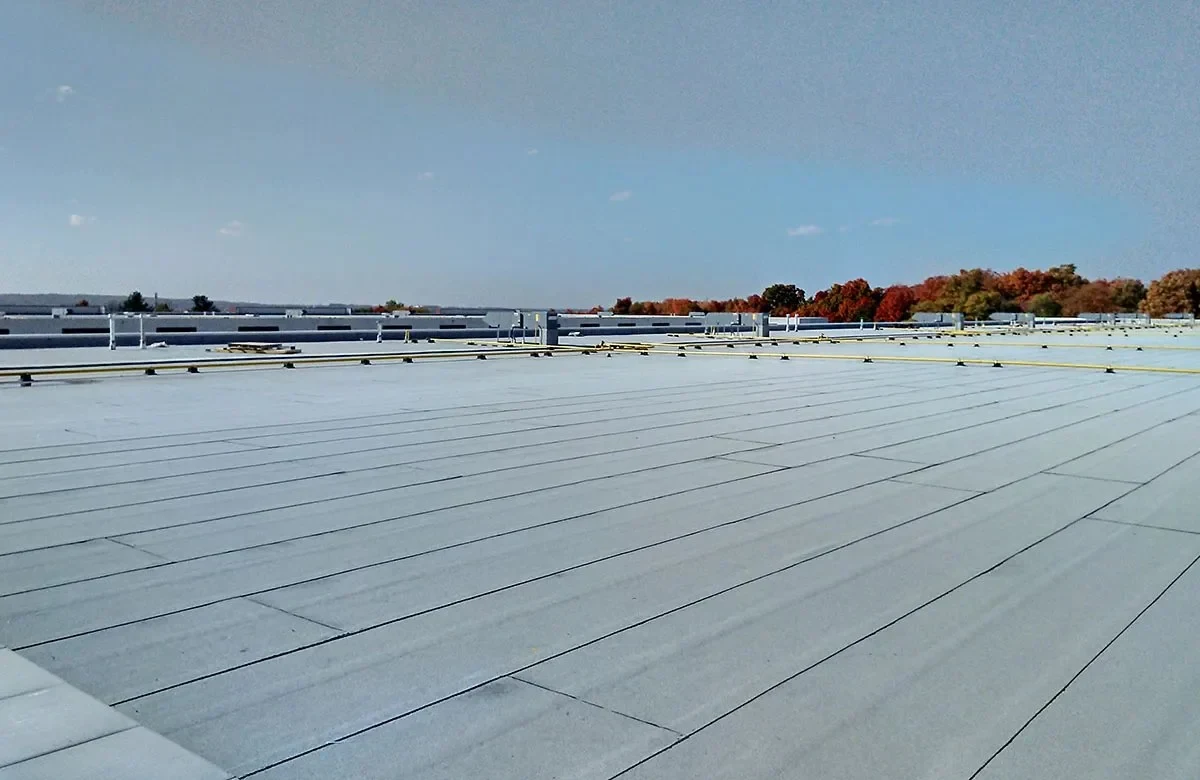
Most of the new low-slope roof going up along I-77 and around Jackson Township is TPO, and there's a reason it's become the default for facility teams managing distribution buildings and manufacturing additions here. We install and service TPO for the kind of roofs that have real rooftop equipment loads, real foot traffic, and real budget scrutiny.
Why TPO Fits Canton's Building Stock
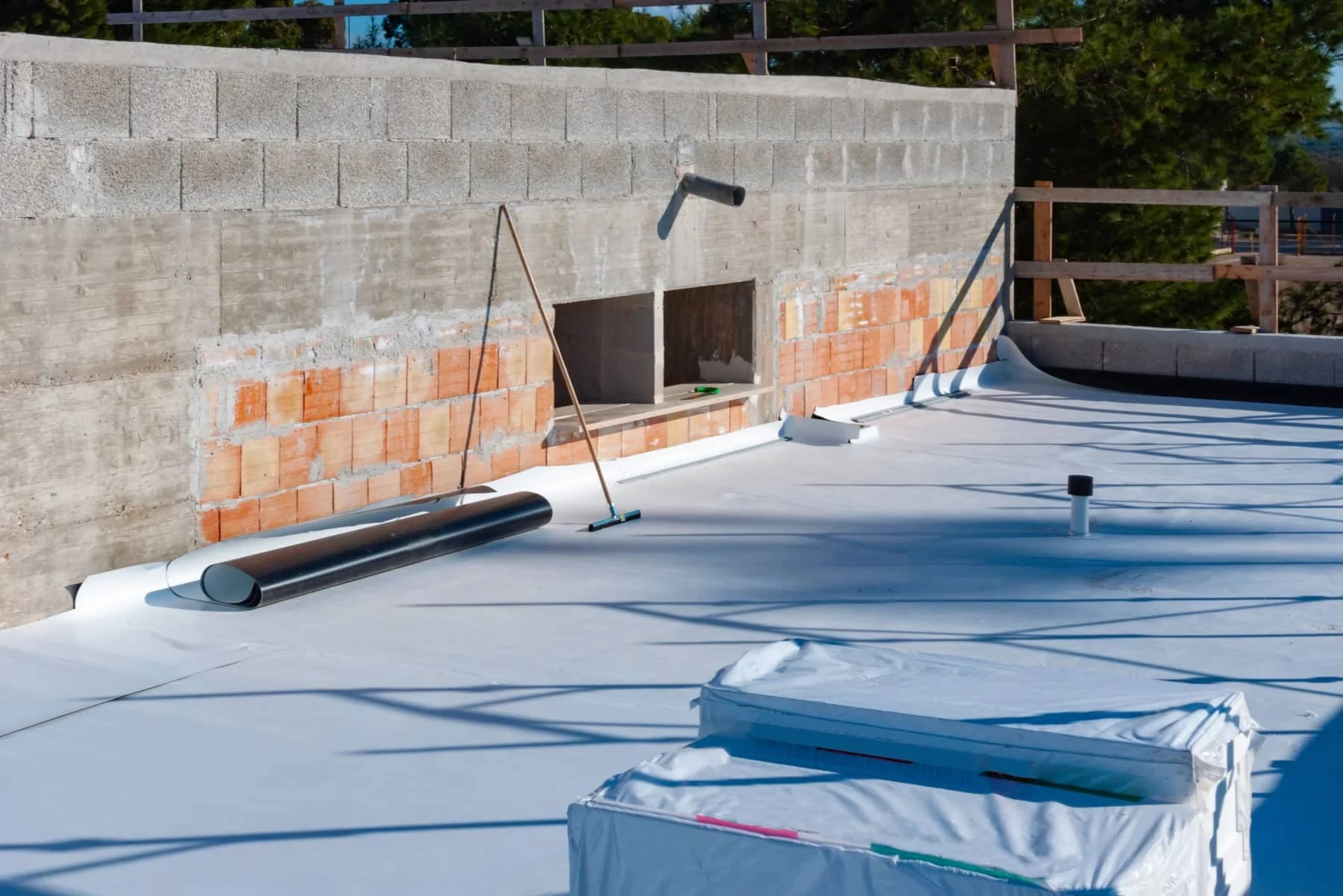
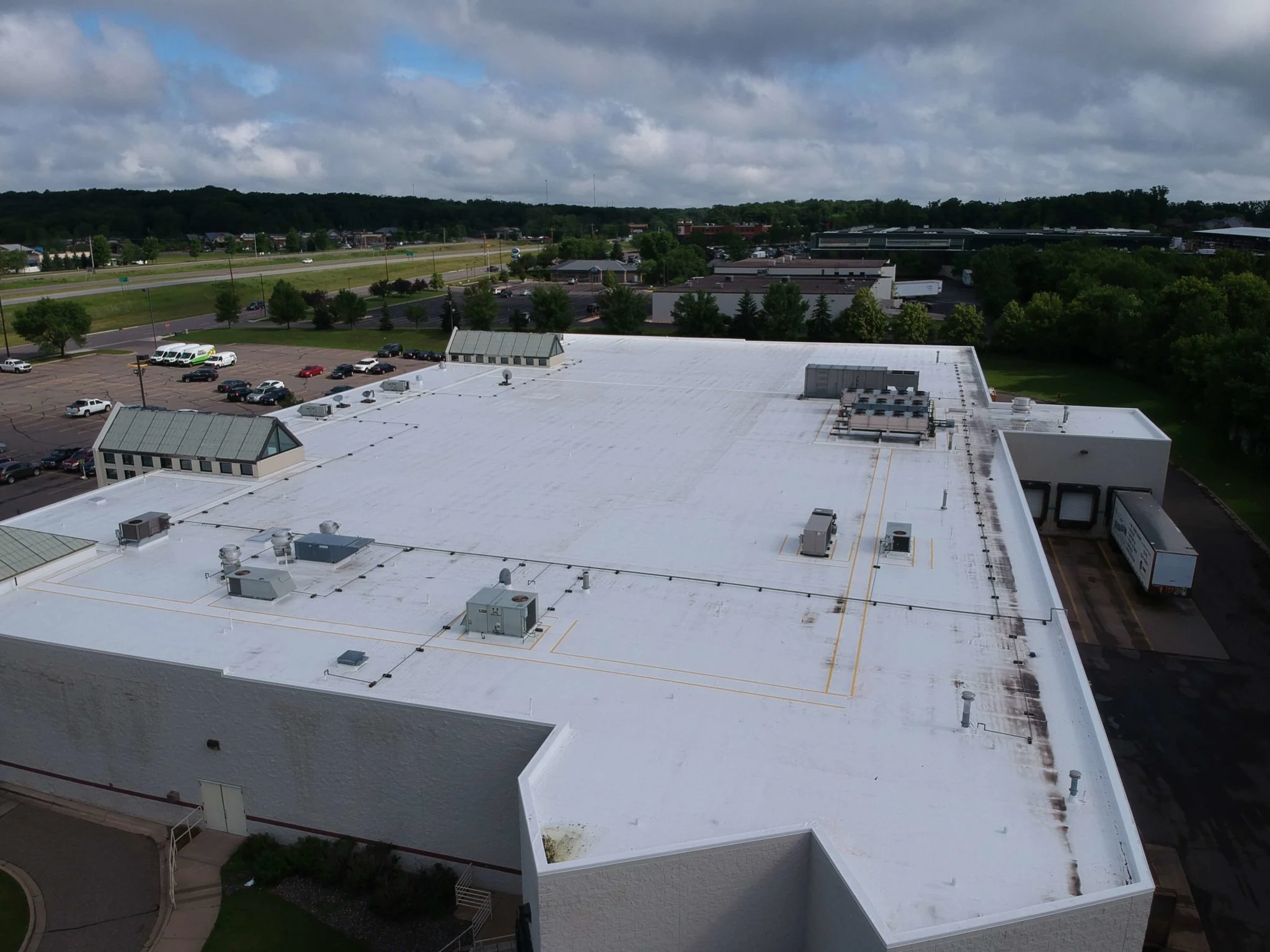
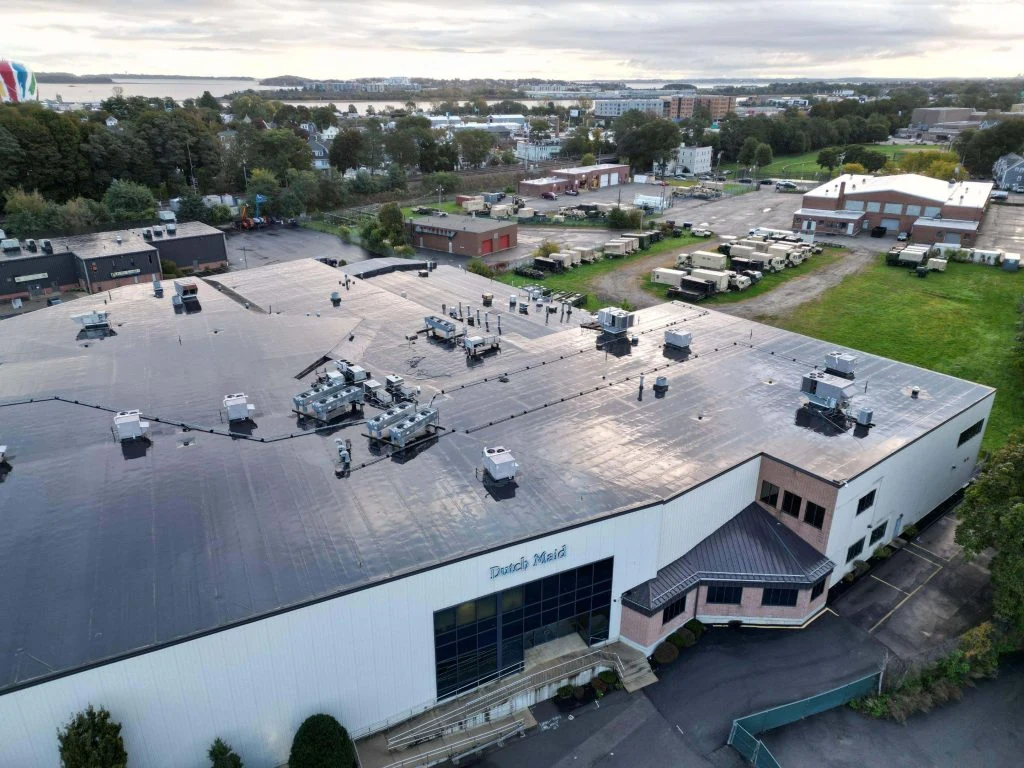
A lot of the industrial and distribution space near the Timken plants and along the I-77 corridor is single-story, low-slope, with rooftop units servicing production floors or warehouse space below. TPO's heat-welded seams give you a membrane that's genuinely watertight at the seam, fused rather than lapped and glued, which matters when you've got dozens of penetrations for HVAC, exhaust, and conduit runs on a plant roof.
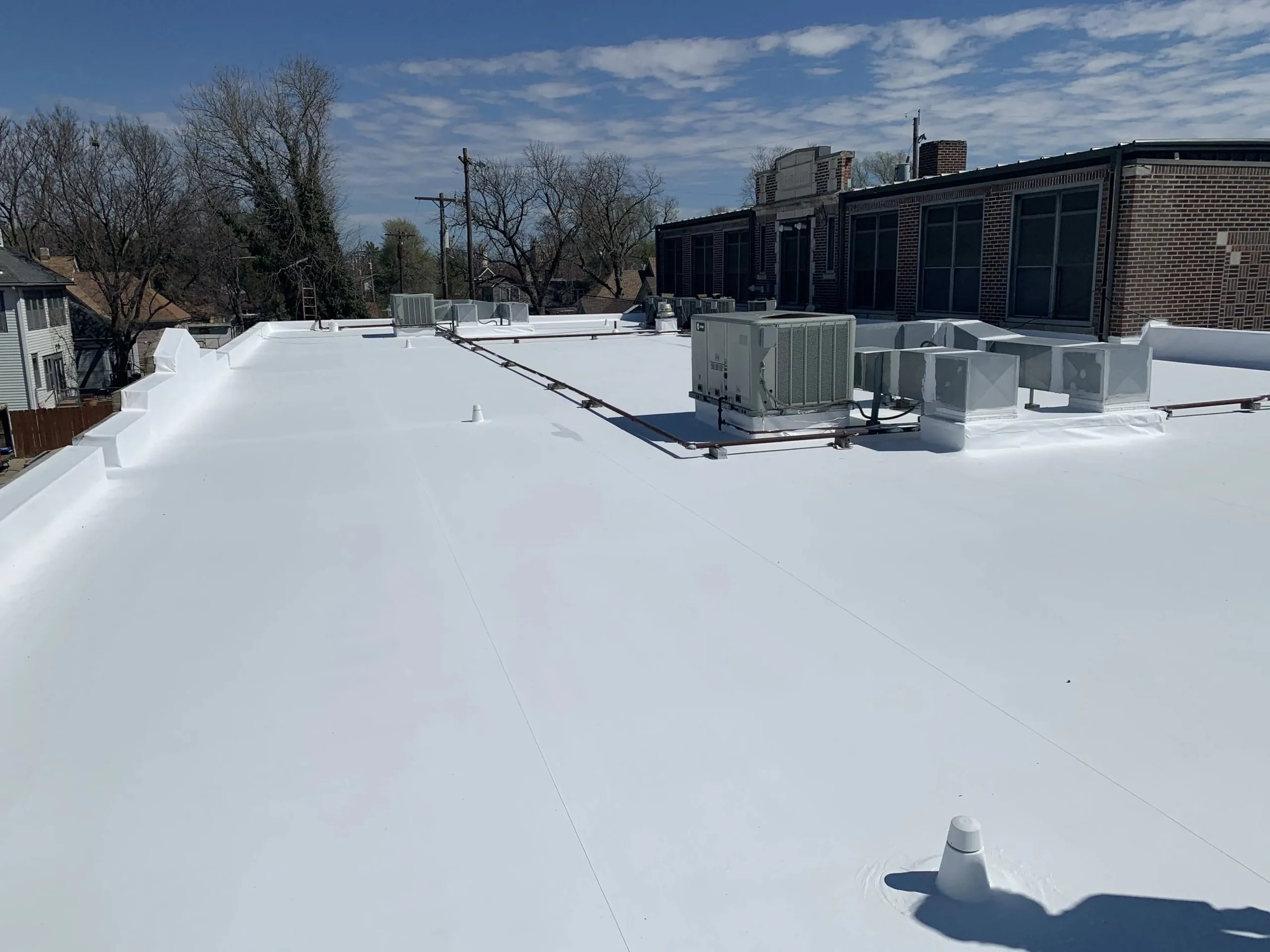
The white reflective surface also does real work in summer. A distribution center with rooftop units running constantly benefits from lower roof surface temperatures, which means less thermal cycling on the membrane and, over years, less stress on the equipment curbs and flashing details.
Seam Performance Through Freeze-Thaw
Stark County winters aren't the worst in northeast Ohio, but we get enough freeze-thaw cycling — thaws in January, hard freezes overnight — that seam integrity is the thing we watch closest on any TPO roof we service. Heat-welded seams resist that cycling better than adhesive-lapped systems because there's no seam sealant to degrade and reopen every time the membrane contracts.
We test seam welds on every installation with a probe rather than relying on a visual check alone, and we document it. If you're the facilities manager signing off on a reroofing project, that test record is what you want in the file when the warranty conversation comes up five years from now.
Mil Thickness and Where It Matters
We install both 60-mil and 80-mil TPO depending on the building. A retail strip with light rooftop traffic doesn't need the same membrane as a manufacturing plant where maintenance crews are up on the roof monthly checking equipment. Thicker membrane costs more upfront but takes foot traffic and mechanical wear better, which matters if your roof sees regular service calls.
- 60-mil TPO for standard low-traffic commercial and retail roofs
- 80-mil TPO for plants and distribution buildings with frequent rooftop maintenance
- Heat-welded seams tested with a probe on every job, not sampled
- Mechanically attached or fully adhered systems depending on deck and wind exposure
- Reinforced flashing at curbs, drains, and penetrations before membrane goes down
What Rooftop Equipment Does to a TPO Roof Over Time
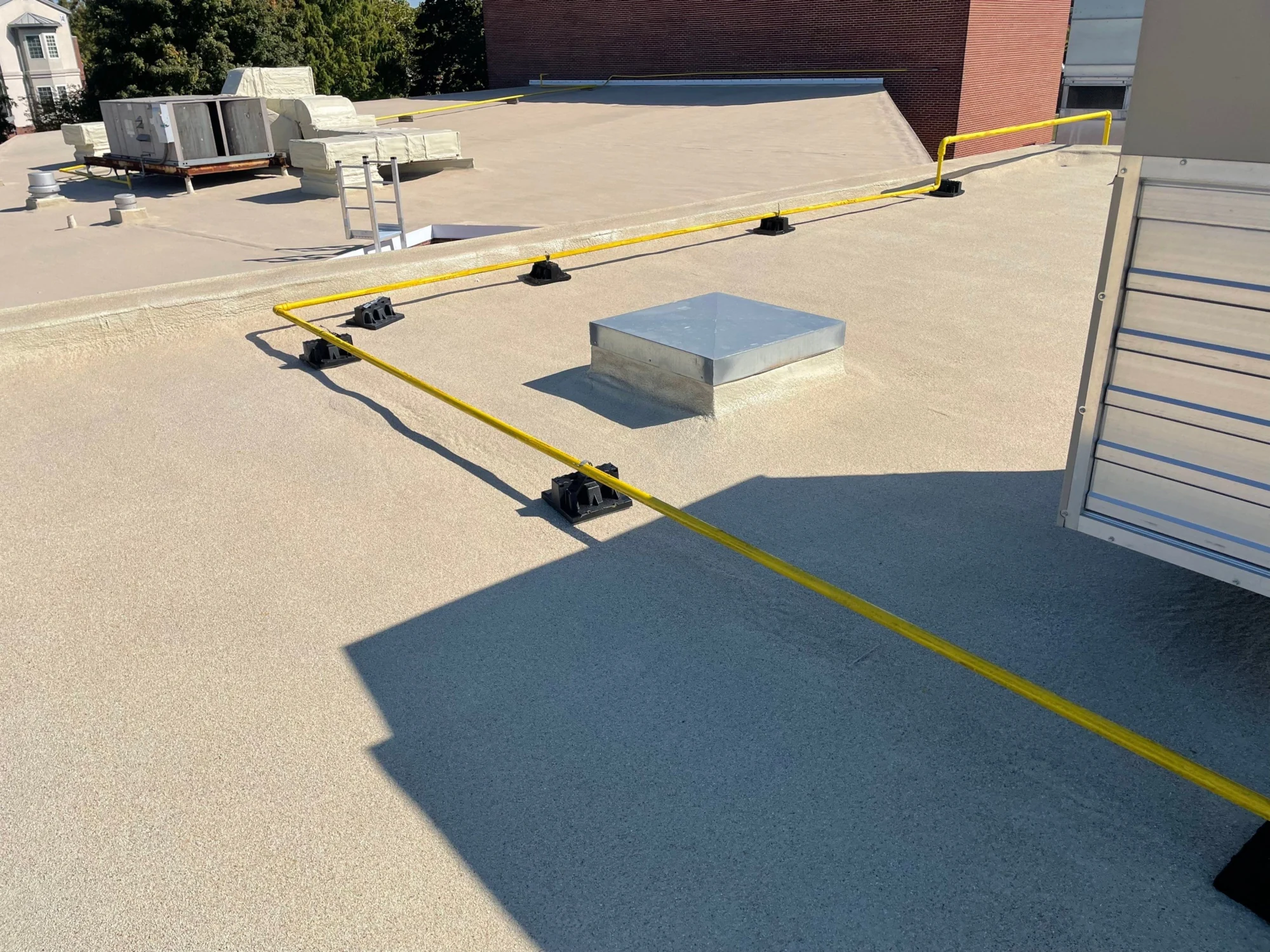
Every plant roof we work on around Canton has some version of the same problem: rooftop units and curbs installed at different times by different contractors, with flashing details that don't match and penetrations that weren't sealed to the same standard as the rest of the field. That's usually where leaks start, not in the open membrane field.
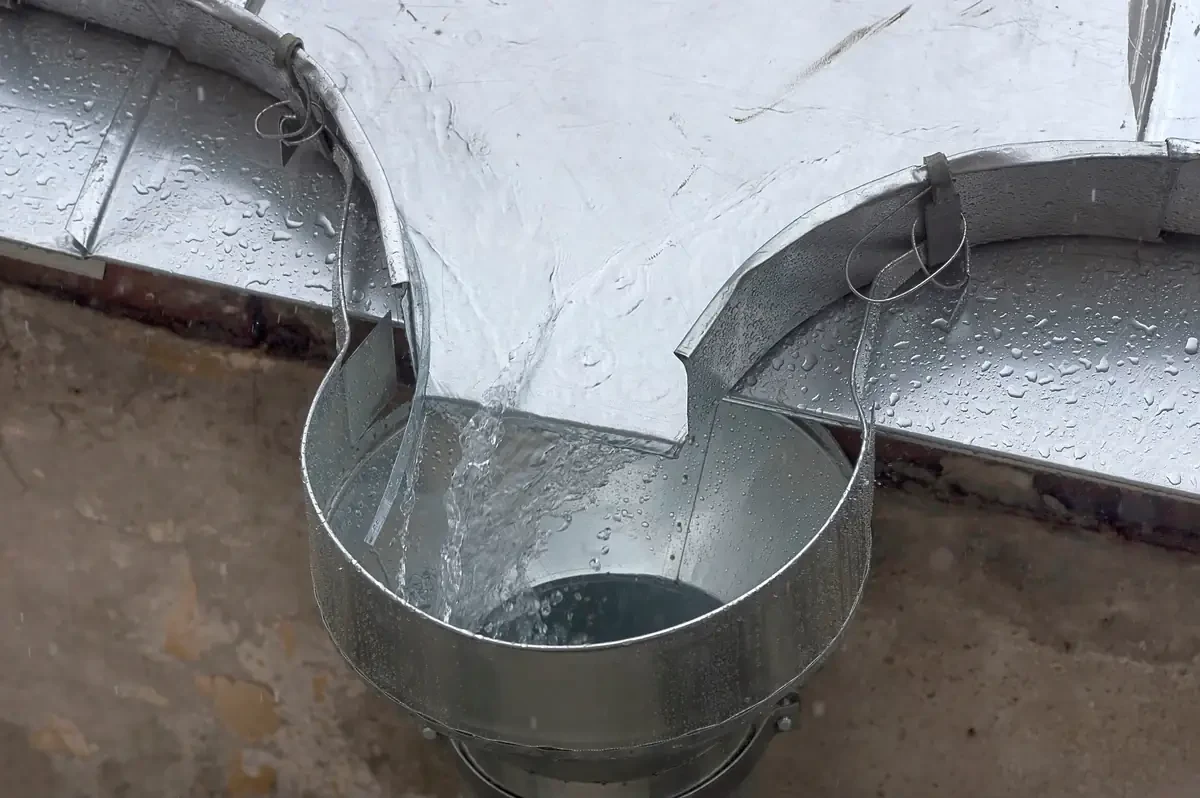
When we inspect an existing TPO roof, we spend as much time at curbs, pipe boots, and equipment pads as we do walking the field. If your maintenance team has been chasing the same leak near a rooftop unit for two seasons, there's a decent chance the membrane itself is fine and the curb flashing is the actual problem.
Downtime and Scheduling on Occupied Buildings
A full TPO reroof on an occupied plant or warehouse gets sequenced in sections so production or shipping keeps moving underneath the work. We'll walk your operations schedule with you before we set a start date, and we can shift crew hours around shift changes if that keeps the work out of your way during peak production.
For distribution buildings running receiving and shipping doors constantly, we coordinate staging areas so material and equipment aren't blocking dock access. That's a conversation we have during the estimate, not something we figure out on day one.
TPO Questions We Get From Plant Engineers
How long does a TPO membrane actually last on a plant roof around here?
With proper installation and regular maintenance, TPO membranes commonly run into their second and third decade before major work is needed, though heavy rooftop equipment traffic and poor drainage will shorten that. We'll give you our honest read on your specific roof rather than a manufacturer's best-case number.
Can you install TPO over our existing built-up roof?
Sometimes, if the existing insulation is dry and the deck is sound. We'll check moisture content before recommending a recover over tear-off, because installing new membrane over wet insulation just traps the problem.
Does TPO hold up against exhaust fumes and chemical exposure from our production process?
Standard TPO handles typical rooftop exposure fine, but if your process vents oils, solvents, or grease, we'll usually steer you toward PVC instead, since it holds up better against those specific chemicals.
What causes TPO seams to fail early?
Almost always it's installation quality, not the membrane itself, incomplete welds, contamination on the seam during installation, or seams run over uneven substrate. That's why we probe-test every seam before we call a job finished.
Will a white TPO roof actually lower our energy bills?
It reduces roof surface temperature and heat gain into the building below, which can ease cooling loads in summer. How much that shows up on your utility bill depends on your building's insulation and HVAC setup, so we won't give you a number we can't back up. We also recommend a scheduled walk of your roof twice a year, once before winter and once after, to catch curb flashing and drain issues before they turn into an emergency call during a shift change.