
Service Area
Assessment
Office
Buildings
Planning
Closeout


Recover Versus Tear-Off: The Decision Most Facility Managers Get Wrong
Every recover conversation we have around Canton starts with the same question from a facilities manager: can we put a new roof over the old one instead of tearing off. Sometimes yes, sometimes the honest answer is no, and getting that decision wrong either wastes budget on an unnecessary tear-off or traps a problem under a new membrane that comes back worse in five years.
What Recover Actually Means
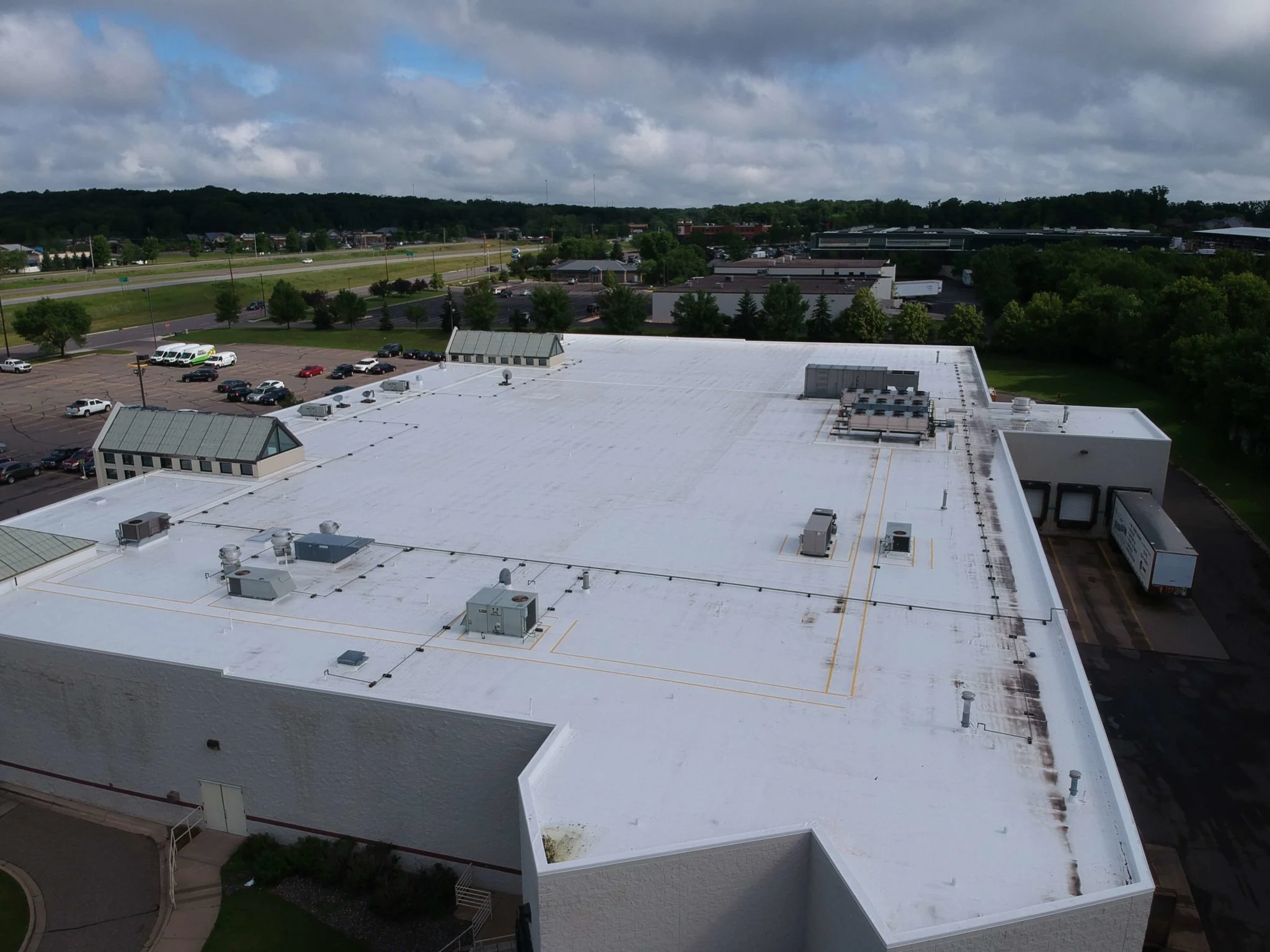
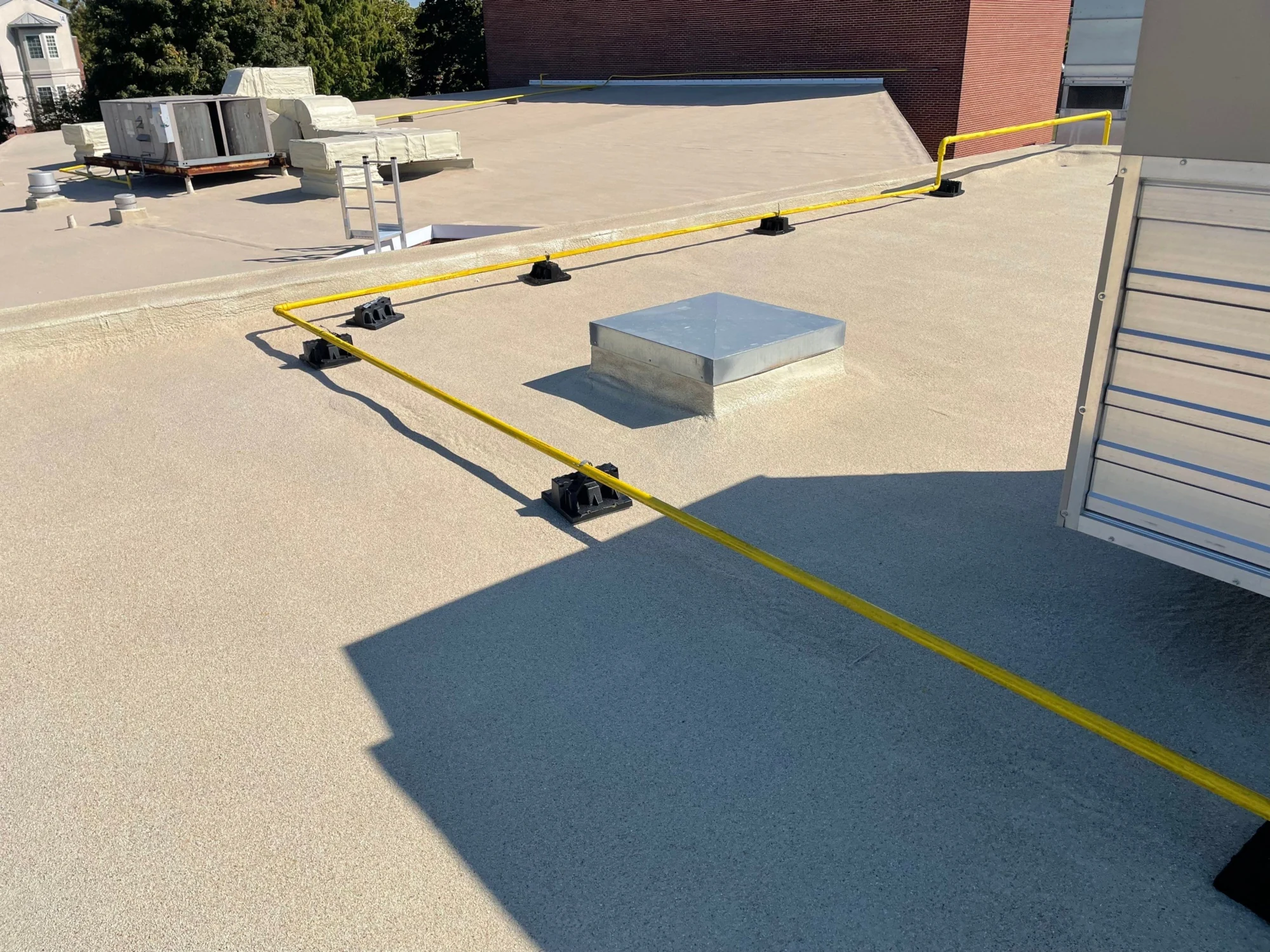
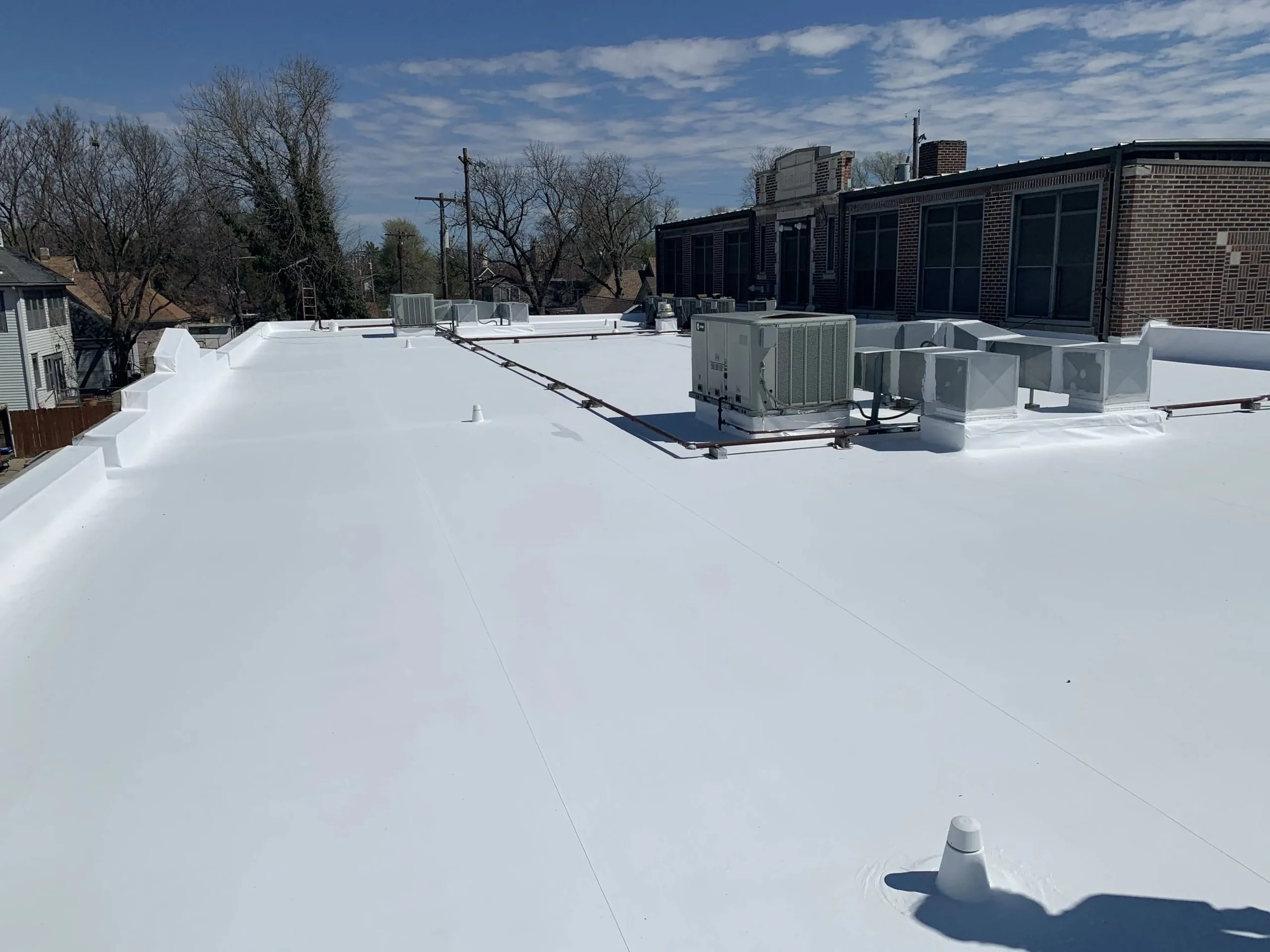
A recover system installs new membrane over your existing roof rather than stripping it down to the deck, which cuts labor cost and, just as important for an operating facility, cuts the downtime and disruption of a full tear-off. For a manufacturing plant that can't afford extended roof-open exposure over an active production floor, or a multi-tenant retail building where tenants can't tolerate weeks of open roof deck overhead, that difference matters as much as the dollar figure. It's often the deciding factor even when the raw material cost comparison looks close.
Recover only works, though, if what's underneath is sound. New membrane over wet insulation or a deteriorating existing roof just seals moisture in and creates a bigger, more expensive problem down the line.
Ohio Building Code Layer Limits
Code limits how many roof layers a building can carry before a recover isn't a legal option anymore, and a lot of Stark County's older manufacturing and downtown buildings have already been recovered once or twice over their history. Part of our job during inspection is confirming your building's actual layer history, sometimes visible in exposed cross-sections at parapet walls or curbs, and checking it against what current code allows.
If your building is already at its layer limit, recover isn't available regardless of how sound the existing roof looks, and we'll tell you that upfront rather than after you've budgeted for the cheaper option. That verification takes a little extra time during the estimate, but it saves everyone a wasted budget cycle later.
The Moisture Question That Decides Everything
Before we recommend recover on any roof, we run a moisture scan across the existing membrane and insulation. Wet insulation under a sound-looking membrane is common on older Stark County buildings, sometimes from a leak that was patched years ago without the wet insulation ever being addressed underneath. Recovering over that traps the moisture permanently and guarantees a bigger problem later.
- Infrared or capacitance moisture scanning across the full roof field
- Core cuts to confirm scan results and check insulation condition directly
- Layer count and code compliance review before recommending recover
- Structural load assessment for additional recover system weight
- Written recover-versus-tear-off recommendation with cost comparison
Minimizing Downtime on Multi-Tenant and Active Production Buildings
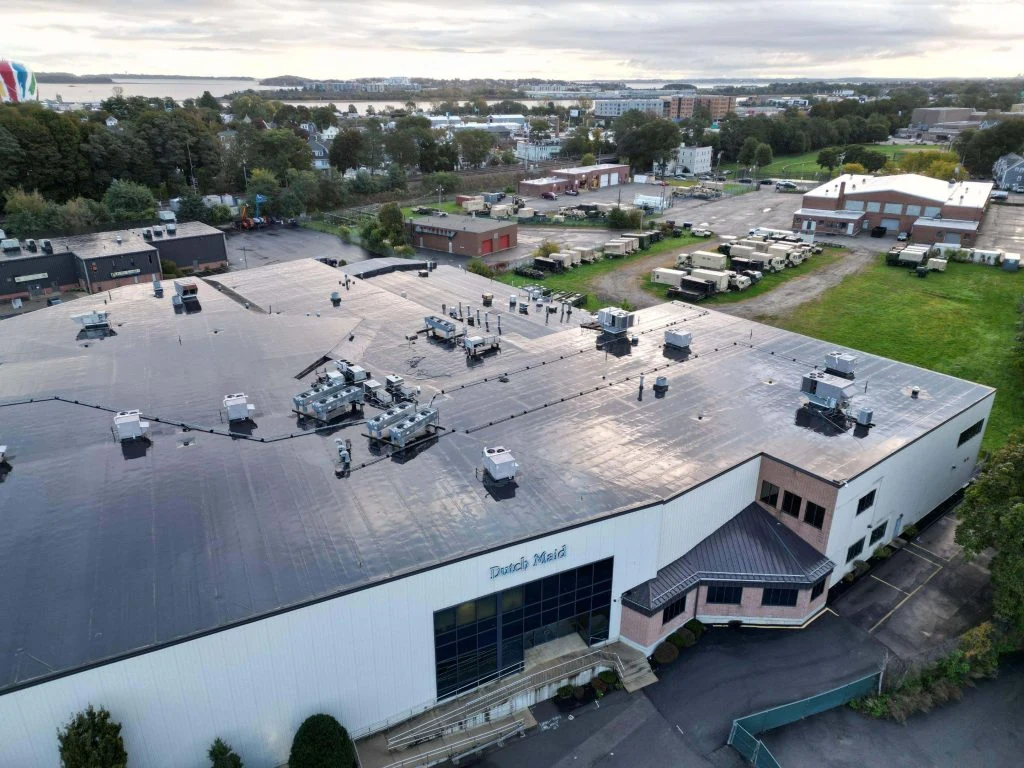
When recover is the right call, it's usually because the downtime savings matter as much as the cost savings. A Belden Village retail building with tenants who can't have exposed roof deck over their sales floor, or a Jackson Township industrial park building running production underneath, both benefit from a recover schedule that keeps the roof weathertight throughout the project rather than exposing deck for extended periods the way tear-off does.
We sequence recover work section by section on occupied buildings specifically to avoid ever having open deck exposed overnight or during a weather event, which is a real risk on a tear-off project if timing goes wrong.
When We Tell Clients Tear-Off Is the Only Honest Option
We recommend tear-off over recover when moisture scanning shows widespread wet insulation, when the building is already at code layer limits, or when structural assessment shows the deck can't take additional recover weight. We'd rather have that conversation upfront than let a client spend recover money on a roof that needed tear-off, only to redo the work in three years anyway and pay for both projects instead of one. That's a conversation worth having before signing off on scope, not after the crew is already on site.
Recover and Overlay Questions From Facility Managers
How do you actually check for moisture without tearing the roof open first?
Infrared scanning at night, when the roof surface temperature differential shows wet insulation clearly, or capacitance meters during the day. We confirm any suspicious readings with a small core cut before finalizing the recommendation.
What happens if we're already at our building's layer limit?
Recover isn't a legal option at that point, full tear-off is required regardless of the existing roof's apparent condition. We verify your building's layer history early in the process so this isn't a surprise mid-project.
Will a recover system actually keep our building watertight better than what we have now?
Yes, assuming the existing roof is a sound candidate, a properly installed recover gives you new membrane performance without the deficiencies of the aging system underneath.
How much shorter is a recover project compared to full tear-off?
It varies by roof size and complexity, but recover generally moves faster since there's no deck strip-down and disposal involved, which also means less disruption time for your tenants or operations.
Can you do a partial recover on just the worst sections of our roof?
Sometimes, if the roof has distinct sections with different histories and the transition detailing can be done correctly. We'll evaluate whether a phased or partial approach makes sense for your specific building and budget. We'll also check your existing warranty terms before scoping any recover and flag anything that could void coverage, so that isn't a surprise after the work is done.