
Service Area
Assessment
Office
Buildings
Planning
Closeout
R-Panel Metal for Warehouses Along the I-77 Distribution Corridor
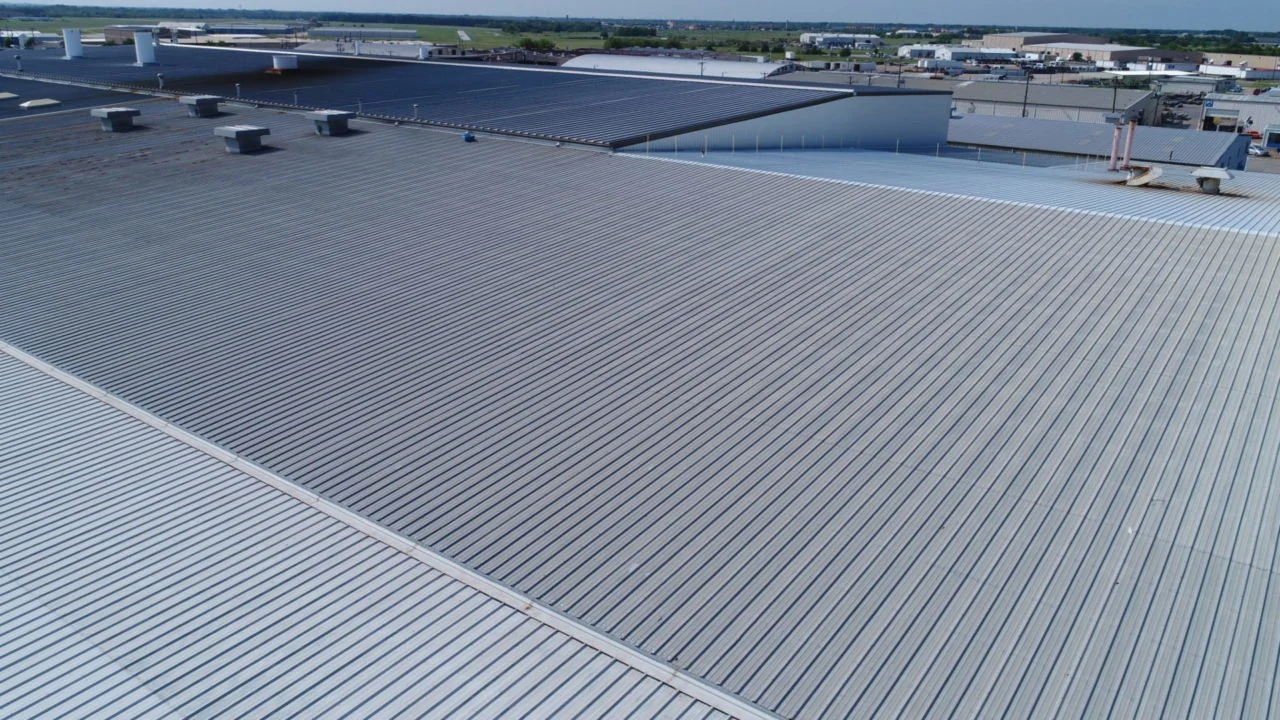
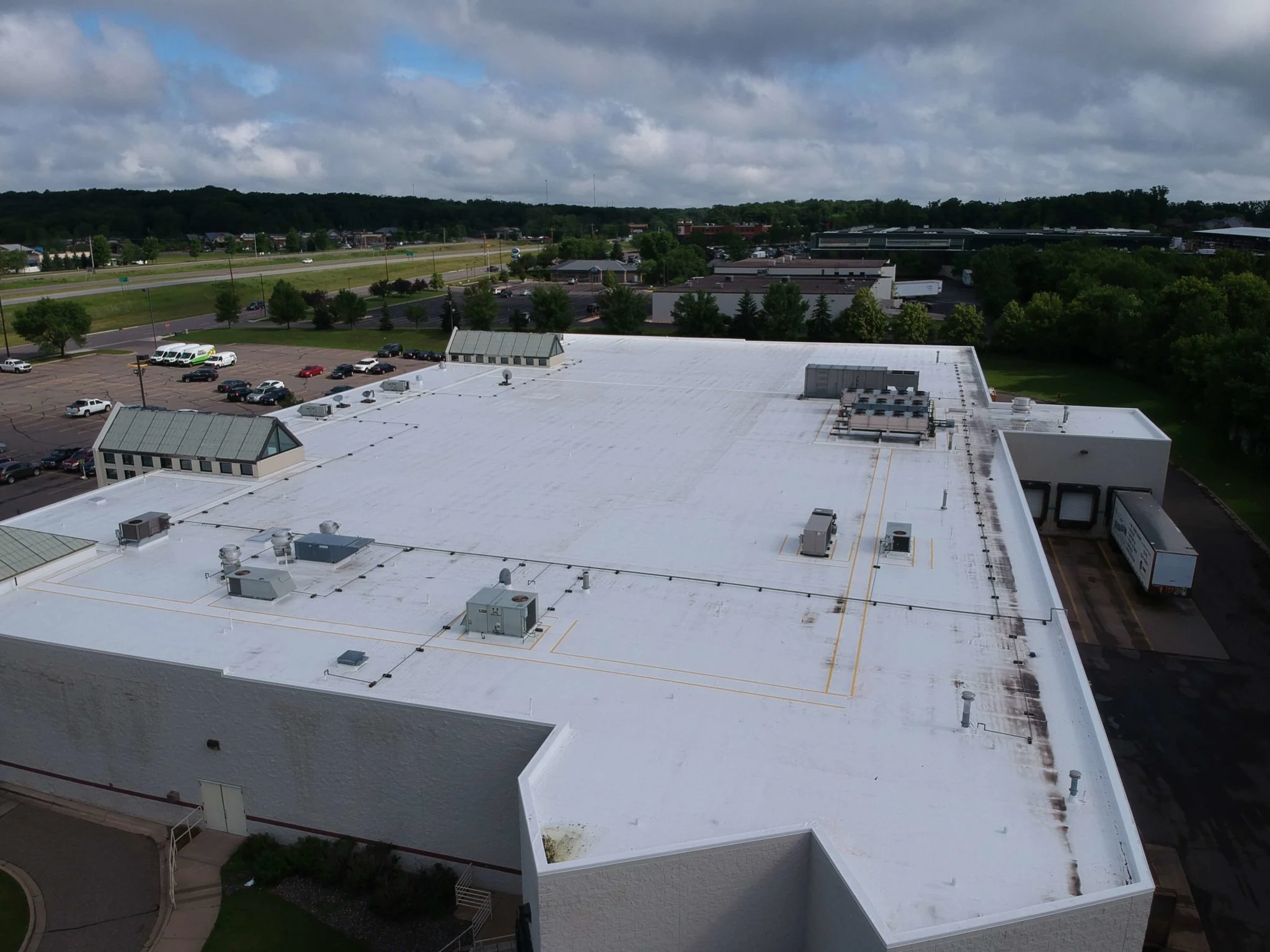
Walk into any distribution building or big-box retail store along I-77 or around Belden Village and there's a decent chance the roof overhead is exposed-fastener metal R-panel. It's the economical choice for large-footprint industrial and retail construction, and it's also the roof type that generates the most repeat maintenance calls once fastener backouts start.
Why R-Panel Dominates Big-Box and Warehouse Construction
For a distribution center or big-box retail building with a huge roof area and a construction budget that has to pencil out, R-panel's lower material and installation cost compared to standing seam makes it the default. It's fast to install over a large footprint, which matters on a warehouse project where the general contractor is working against a tight schedule to get the building operational.
The tradeoff is exposed fasteners, thousands of them across a large roof, each one a potential leak point as washers age and screws back out over years of thermal cycling. That's the maintenance reality facility managers inherit once the building is occupied.
Fastener Backout: The Work Order That Never Stops
If you're managing a distribution building with an R-panel roof, you already know the pattern. Fasteners loosen from thermal expansion and contraction, washers degrade under UV exposure, and eventually a screw backs out enough to let water in around it. It rarely shows up as one dramatic leak, it's usually a slow stain on a ceiling tile that gets worse every time it rains.
We inspect fastener condition across the full roof field instead of spot-checking only the area near a reported leak, because if fasteners are backing out in one section they're aging the same way everywhere else on the roof, even where it hasn't shown up as a leak yet.
Refastening Versus Recover
- Full-roof fastener inspection and refastening with upgraded washers
- Screw pattern upgrades where original spacing was inadequate
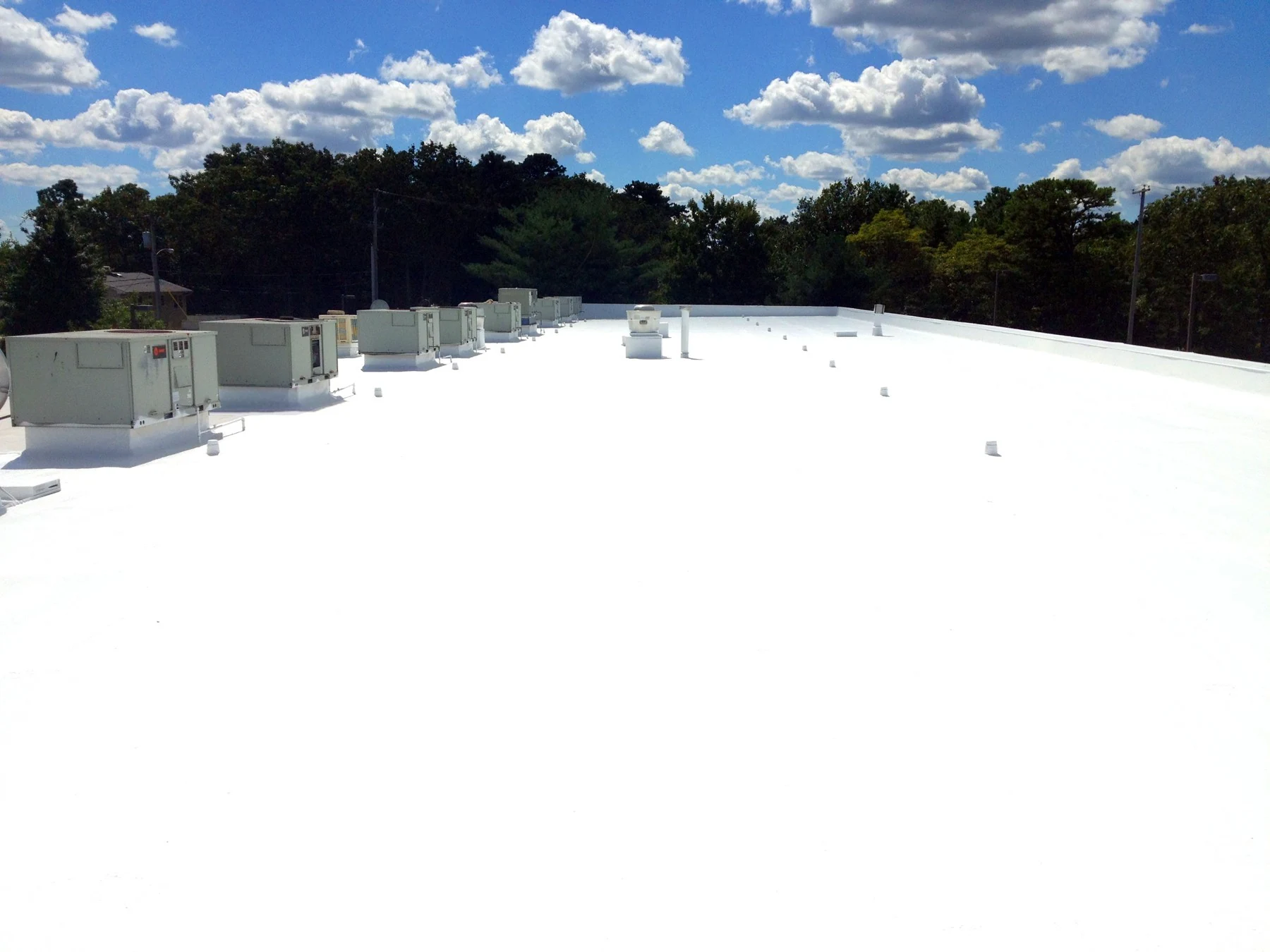
- Silicone or acrylic recover coating over sound existing panels
- Panel replacement on sections with corrosion or structural panel failure
- Ridge cap and end-lap resealing where most leaks actually originate
What We Check Beyond the Fasteners
Ridge caps and end laps are the other common failure point on R-panel roofs, sealant that's dried out and cracked at panel overlaps, or ridge flashing that's worked loose from wind uplift over the years. On a large distribution roof, these details matter as much as the fastener count because a failed end lap can move a lot of water in a heavy storm.
We climb the ridge line specifically during inspection rather than relying on a ground or drone survey alone, because sealant failure at a lap joint is easy to miss from a distance and easy to miss from the wrong angle in a photo.
We also look at panel gauge and condition where the roof takes regular foot traffic near rooftop units, since thinner-gauge panels can dent and deform under repeated maintenance access, creating new low spots that hold water.
On buildings with several rooftop units serviced by different vendors over the years, we frequently find inconsistent walk-pad placement or none at all, which is often why the panel damage is concentrated in the same few spots every time we're called out.
Recover Instead of Reroof for Aging R-Panel
A lot of R-panel roofs along the I-77 corridor are sound structurally but leaking chronically from fastener and sealant age. A silicone or acrylic recover coating, applied after refastening and resealing, can add real years to that roof without the cost and downtime of a full panel tear-off, which matters a lot for a distribution building that can't afford extended roof access disruption to shipping and receiving. We'll tell you plainly if the panels themselves have deteriorated past that point, which is a straightforward field call once the fasteners and seams have been inspected up close.
R-Panel Questions From Warehouse and Retail Facility Managers
Why do we keep getting the same leak reports every few months after repairs?
Usually because the repair addressed one fastener or one section instead of the roof-wide pattern. If fasteners are backing out in one area, they're aging everywhere. We recommend full-field refastening rather than chasing individual reports one at a time.
Is it cheaper to just replace the whole roof instead of dealing with fasteners forever?
Not usually, not on a sound panel roof. Refastening and recoating typically costs a fraction of full replacement and can add a decade or more of service life if the panels themselves are still structurally sound.
Can you do fastener work without shutting down our loading docks?
Yes, we stage and sequence around active dock doors, which is standard on distribution building work. We'll coordinate directly with your shipping and receiving team on timing.
How do you know if it's fasteners or something else causing our leak?
Full roof inspection, checking fastener torque and washer condition across the field, plus ridge cap and end-lap sealant. We document specifically where the failure is before recommending a fix, rather than guessing.
What's the actual lifespan of an R-panel roof with proper maintenance?
With regular fastener inspection and refastening on schedule, these roofs commonly run several decades, well beyond what facility teams expect when the leaks start piling up in year ten or twelve without maintenance. If you manage several distribution buildings across Stark County, we can stagger inspections seasonally across your locations so it's a predictable line item rather than separate reactive calls from each site.