
Service Area
Assessment
Office
Buildings
Planning
Closeout

The Perimeter Is Where Most Wind Failures Start
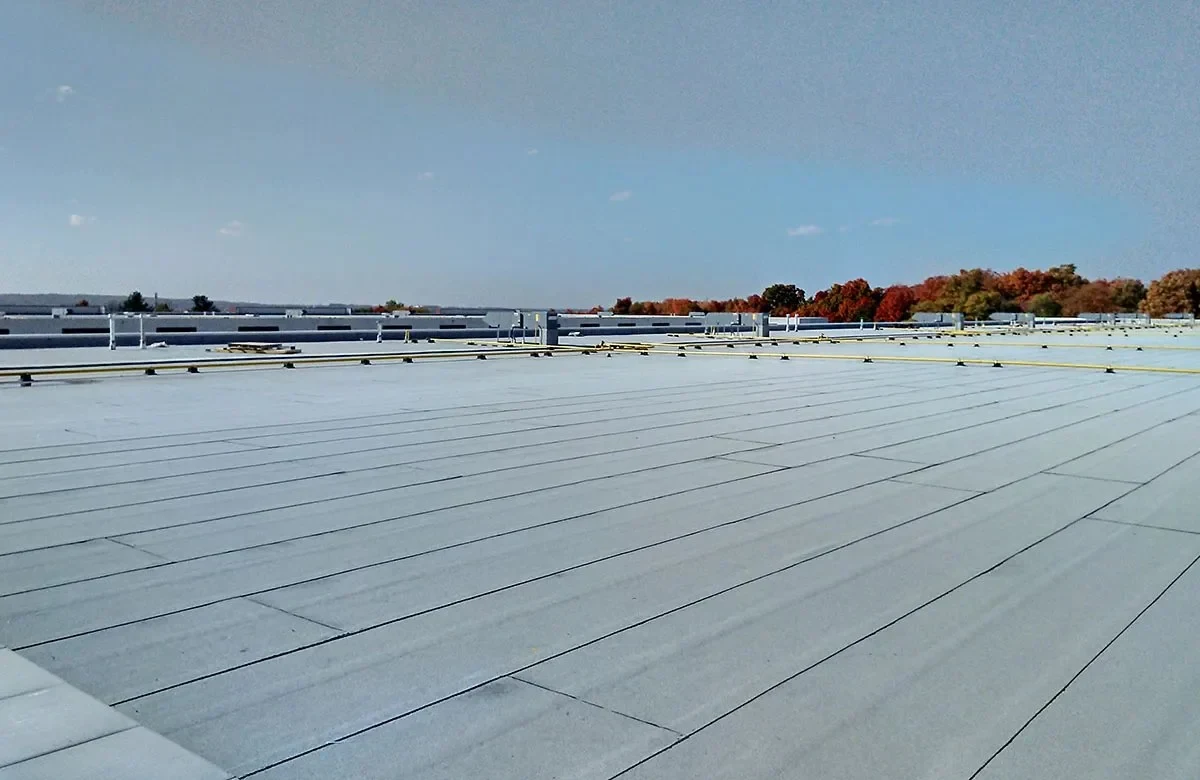
Wind pressure on a flat commercial roof concentrates hardest at the corners and edges, which is exactly where edge metal, coping, and gutters live. When that hardware is loose, undersized, or fastened to an outdated standard, it's usually the first thing to go in a wind event — and once it goes, the membrane it was holding down often follows. Commercial Roofing Contractors of Canton treats perimeter detailing as a structural item, not a finishing touch.
Why the Edge Takes the Load First
Wind moving across a flat roof creates uplift pressure that's strongest right at the perimeter and corners, where airflow separates and accelerates. Edge metal is the component holding the membrane down against exactly that pressure, so it has to be fastened at a spacing and depth that matches the actual uplift forces on your specific building — height, exposure category, and roof geometry all factor in. Edge metal installed to an old or generic spec is a weak point waiting for the next strong system to find it.
We see this most often on older buildings that have never had their perimeter detailing updated since original construction, even after a reroof replaced the membrane in the field. New membrane over failing edge metal is still a failure waiting to happen.
Coping on Parapet Walls
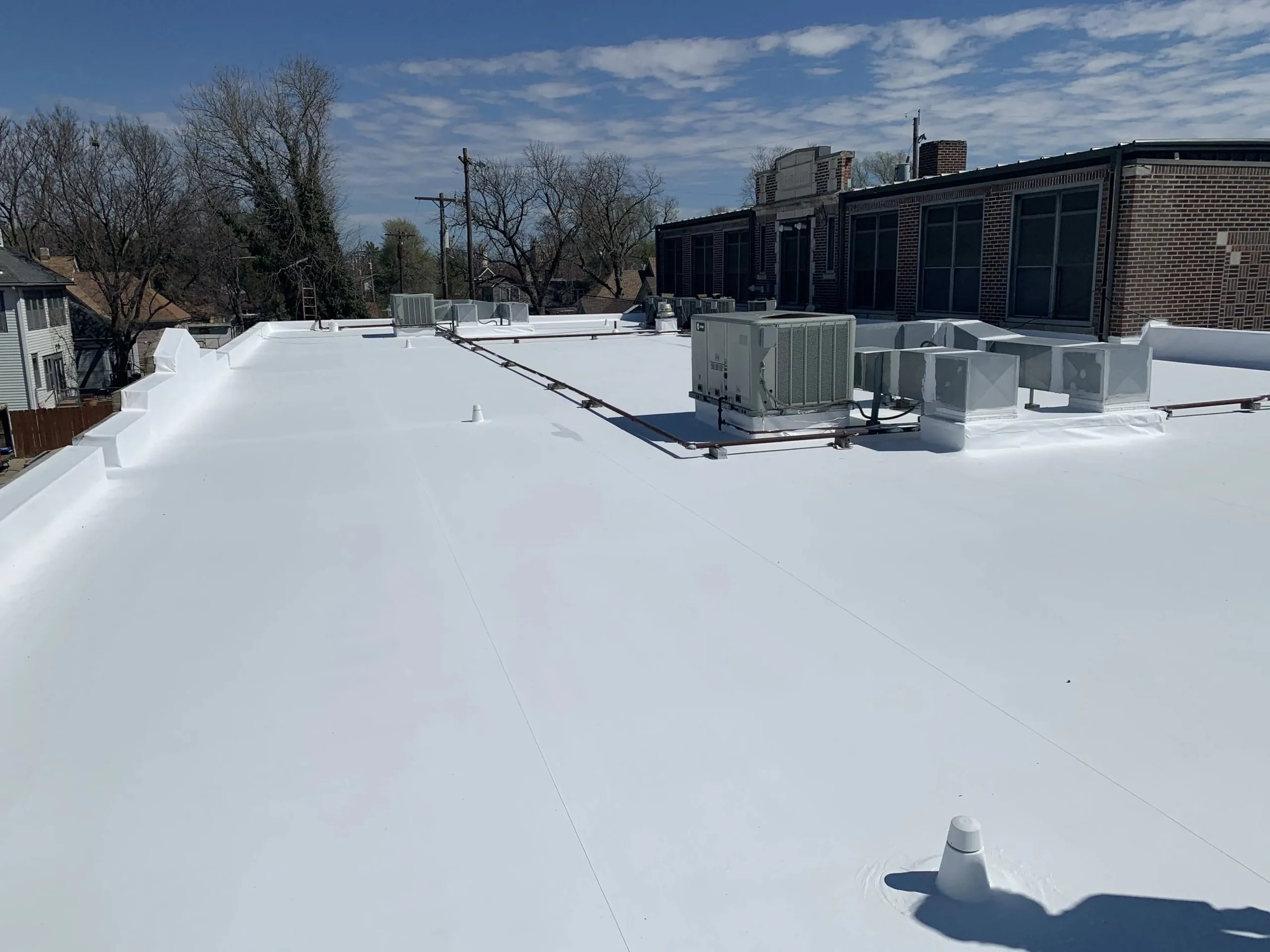
Buildings with parapet walls — common on downtown Canton commercial buildings and a lot of retail construction at Belden Village — use coping caps to seal and protect the top of the wall while also anchoring the membrane termination underneath. Loose coping joints let wind-driven rain behind the cap, which tracks down inside the wall assembly rather than off the roof, often causing interior wall damage that shows up nowhere near the roof itself. We check coping seams and cleat attachment as a routine part of any inspection, since this is a failure point that's easy to miss from the roof field.
Signs Your Perimeter Detailing Needs Attention
- Edge metal that flexes or lifts noticeably when pressed by hand
- Visible gaps between coping sections or at corner miters
- Membrane pulling away from the fascia or edge detail
- Fastener heads backing out or showing rust staining below
- Water staining on interior walls below parapet lines with no obvious roof leak
- Gutters pulling away from fascia brackets or sagging under debris weight
Any of these on their own might just be a maintenance item. Several together on the same building usually mean the whole perimeter system needs a closer look rather than a single spot repair.
Gutters and Getting Water Off the Roof
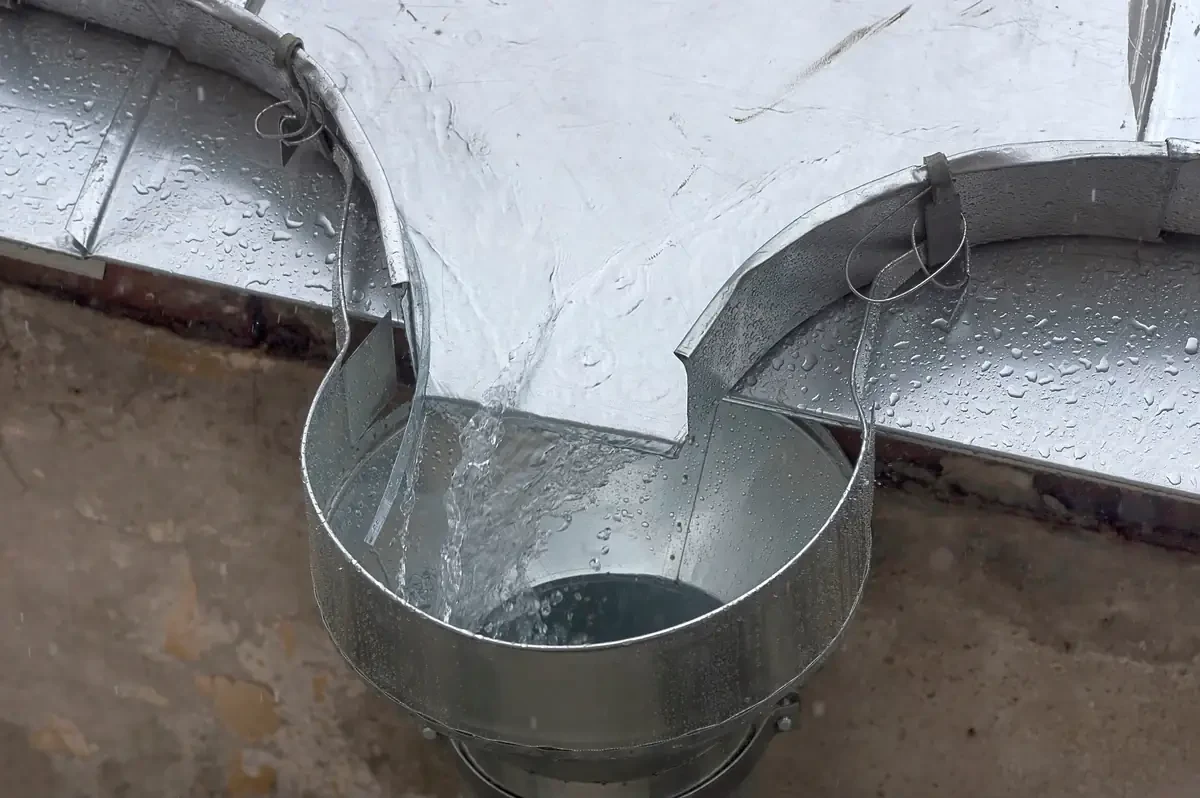
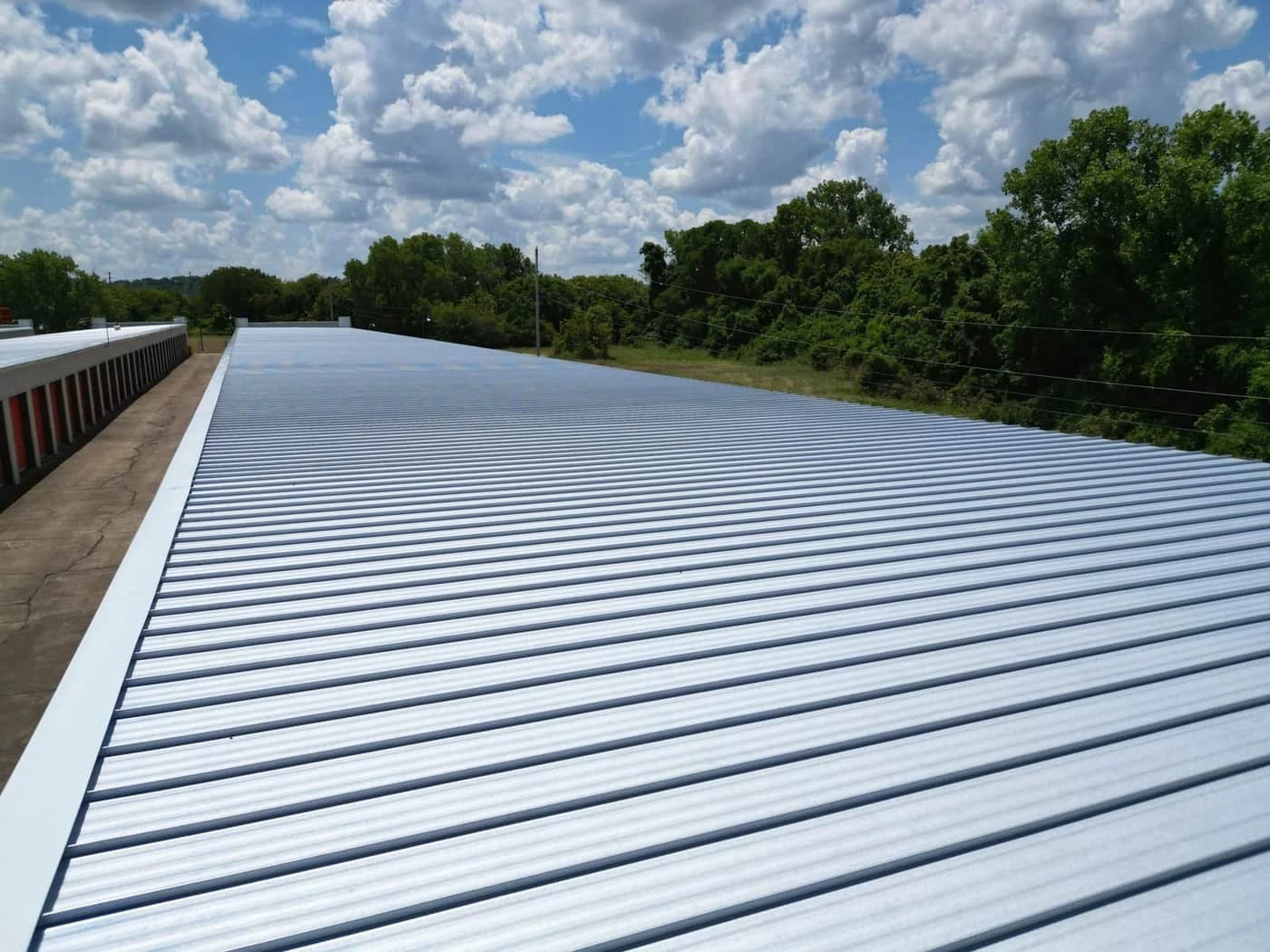
Perimeter gutters matter most on buildings without adequate interior drainage, and on sloped or metal panel roofs where all the water sheds to the edge instead of to interior drains. A gutter that's undersized, clogged, or pulling away from its brackets backs water up at the fascia line, which finds its way behind edge metal and into the wall assembly below. We size and pitch gutter runs to actually handle the roof area feeding them, since simply replacing what was there before assumes the original sizing was adequate, and on older buildings it often wasn't.
Fastening to Current Wind Standards
Wind uplift standards for edge metal have tightened over the years, and a lot of buildings in the Canton market still carry perimeter detailing installed under an older code cycle. When we replace edge metal, coping, or gutters, we fasten to current standards for your building's height and exposure rather than simply matching what was there originally. That's especially relevant on manufacturing and distribution buildings with large, exposed roof edges along the I-77 corridor, where wind exposure is higher than a sheltered downtown lot.
We've found original-era edge metal on some of the older buildings around Massillon and downtown Canton fastened at spacing that would never pass a current wind uplift calculation, simply because it predates the standards in use today. Replacing it to current spec is one of the higher-value repairs available on an older building, since the cost is modest relative to what a full membrane blow-off would run.
This kind of upgrade also tends to be a good candidate for a maintenance-cycle budget rather than a capital project, since it can be scoped and completed on a single roof without any of the disruption a full reroof involves.
Common Questions on Edge Metal and Gutters
How do we know if our edge metal is actually a wind risk?
We check fastener spacing, depth, and condition against current uplift requirements for your building's height and exposure during any inspection.
Can you replace just the coping without touching the field membrane?
Yes, coping and edge metal work can usually be done as a standalone project without disturbing the roof field, as long as the membrane termination underneath is sound.
Why did our gutters fail if the roof itself is fine?
Gutters take on debris weight and water volume the roof membrane never sees directly, so they can fail well before the membrane shows any wear.
Does old edge metal void our roof warranty?
It can, if the manufacturer's fastening spec isn't being met. We check this as part of any warranty-related inspection.
How often should coping and edge metal be checked?
At minimum during your regular roof inspections, and always after a significant wind event given how much load concentrates right at the perimeter.