
Service Area
Assessment
Office
Buildings
Planning
Closeout

Silicone Restoration: Buying Years Back on an Aging Roof
Every capital budget cycle, we sit across the table from FMs who have a roof that's past its prime but a replacement that doesn't fit this year's spend. Silicone restoration coating is often the answer that lets both things be true — the roof gets fixed and the full reroof gets pushed to a budget cycle that can actually absorb it.
What a Silicone Coating Actually Does
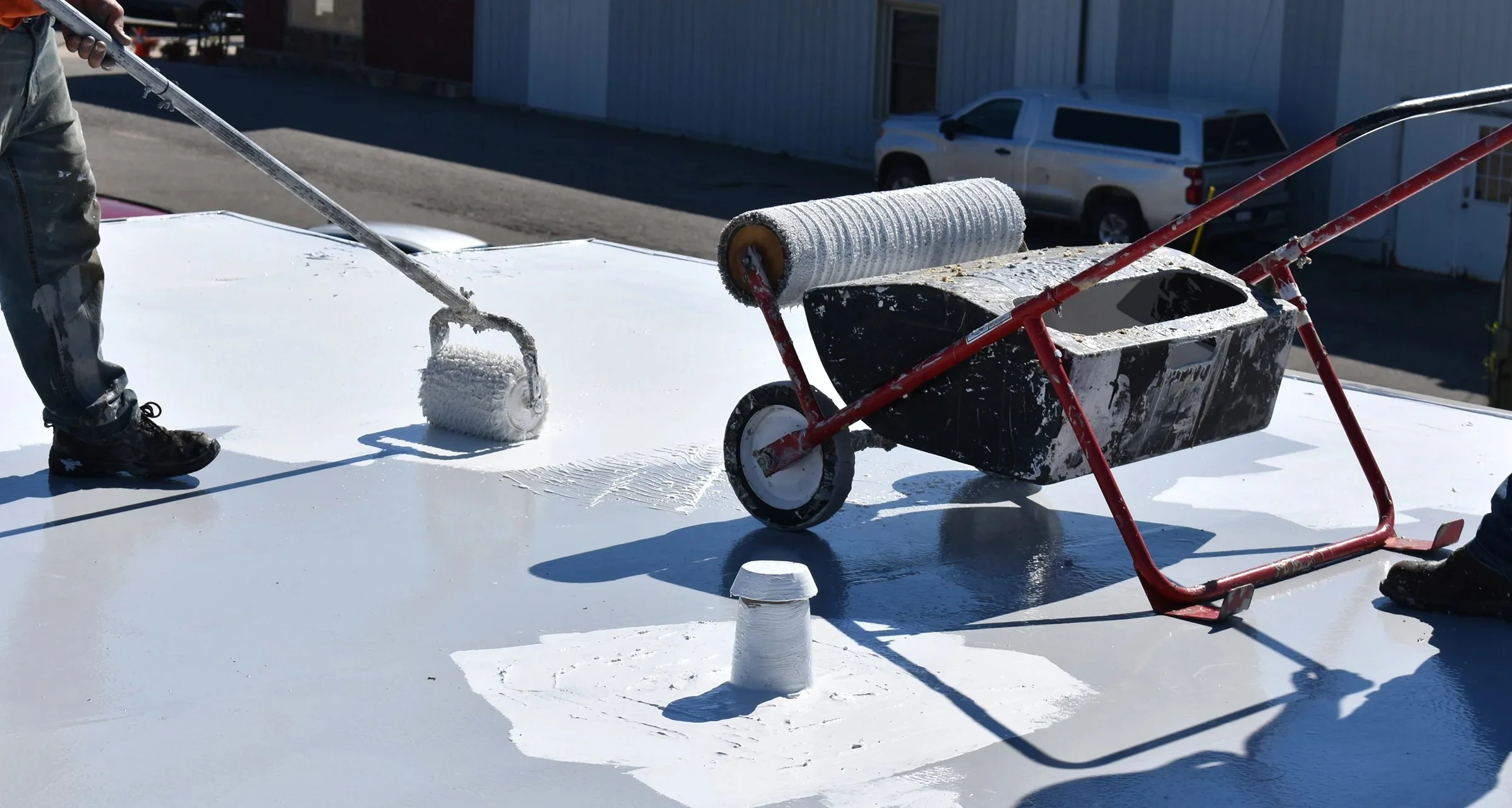
Silicone restoration is a fluid-applied coating that goes directly over an existing roof — EPDM, modified bitumen, metal, or aged single-ply — after the surface is cleaned, repaired, and primed as needed. It cures into a continuous, monolithic layer that renews the roof's waterproofing without a tear-off. It's not a paint job; a properly specified silicone system carries real thickness and its own warranty when installed to manufacturer requirements, and it functions as the new weatherproofing surface, not a cosmetic topcoat.
The appeal for capital planning is straightforward: restoration typically costs a fraction of full replacement, and it defers the bigger expense to a future budget cycle while buying real years of service life in the meantime.
Why Ponding Water Resistance Is the Real Selling Point
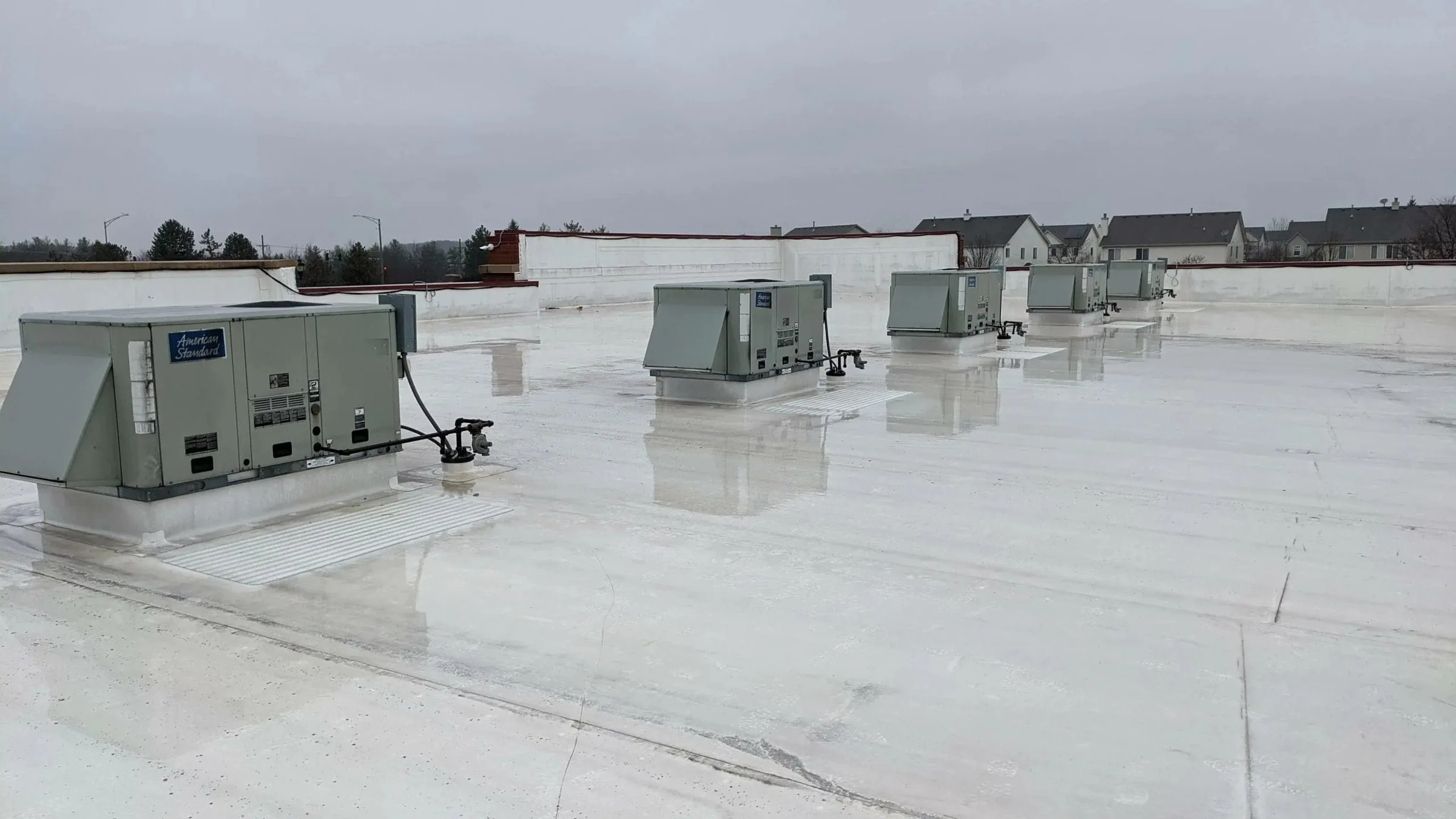
Acrylic coatings are a cheaper alternative in the same general category, but they don't hold up under standing water the way silicone does. A lot of the older manufacturing buildings around Stark County have minimal roof slope and drains that don't move water as fast as a modern design would, so ponding is common rather than exceptional. Silicone is formulated to tolerate extended water contact without breaking down, which makes it the right choice on any roof with documented ponding, and we won't recommend acrylic on a roof with that history even though it costs less.
We map ponding areas during the pre-restoration inspection and confirm the coating spec matches what the roof actually experiences rather than whatever's cheapest to apply.
What the Existing Roof Needs to Qualify
Restoration only works if the substrate underneath is still structurally sound. We check for wet insulation with a moisture scan before recommending a coating — if water has already gotten into the insulation layer, coating over it just traps the problem and the roof needs a different approach, usually a partial or full recover instead. Membrane splits, significant seam failures, or deteriorated flashings get repaired first; the coating goes over a roof that's been brought back to a stable baseline, not one that's actively failing.
- Roof passes a moisture scan — no significant wet insulation trapped under the existing membrane
- Existing seams and flashings are repaired or in acceptable condition before coating
- Membrane field is intact enough to bond properly, without widespread splits or brittleness
- Ponding water areas are documented so the coating spec accounts for standing-water exposure
- Building owner understands the recoat cycle needed to keep the system under warranty long-term
The Recoat Cycle and What It Means for Maintenance Budgets
Silicone restoration isn't a one-time fix that lasts forever without attention. Most systems are designed around a recoat interval — a maintenance coat applied on a set schedule to keep the system performing and to keep any manufacturer warranty active. We build that expectation into the proposal upfront so it doesn't come as a surprise years later. For FMs managing a portfolio of buildings, that recoat cycle is a predictable line item that's far cheaper and easier to plan around than a full tear-off happening on an unpredictable emergency timeline.
We track recoat due dates for the roofs we maintain so the reminder comes from us rather than getting missed in a busy facilities calendar.
Where We Don't Recommend Restoration
Not every roof is a good restoration candidate. If the deck has structural issues, if insulation is saturated across a large percentage of the roof, or if the building's use is about to change in a way that changes roof requirements, coating over the existing system is throwing good money after a problem that needs a different fix. We'll say so directly rather than sell a coating job on a roof that needs to come off.
Age of the underlying membrane matters too — a roof coated too late in its life, after the field material itself has degraded past what a surface coating can compensate for, won't deliver the years of extended service that make restoration worth doing.
Questions About Roof Coating and Restoration
How many years of extra life does a silicone coating actually buy?
It depends heavily on the condition of the existing roof going into the project, but a well-executed restoration on a qualifying roof commonly extends useful service life meaningfully, with a scheduled recoat keeping it going further.
Can you coat a roof that already has some ponding water?
Yes — that's actually where silicone's ponding-water resistance matters most. We'd still address drainage issues where practical, but the coating itself is formulated to handle standing water better than most alternatives.
Is silicone restoration cheaper than acrylic coating?
Silicone generally costs more upfront than acrylic, but acrylic isn't suited to roofs with ponding water, which rules it out for a lot of the buildings we assess. We'll recommend the coating that actually fits the roof's real conditions.
What happens if my roof fails the moisture scan?
That roof isn't a good restoration candidate as-is. Depending on how widespread the wet insulation is, we'd typically recommend a partial recover addressing the wet zones, or in more extensive cases, a full tear-off and replacement.
Does a silicone-coated roof still need regular inspections?
Yes. Coating extends the roof's life but doesn't eliminate the need for periodic inspection, particularly at flashings, drains, and any area prone to ponding or debris accumulation.