
Service Area
Assessment
Office
Buildings
Planning
Closeout
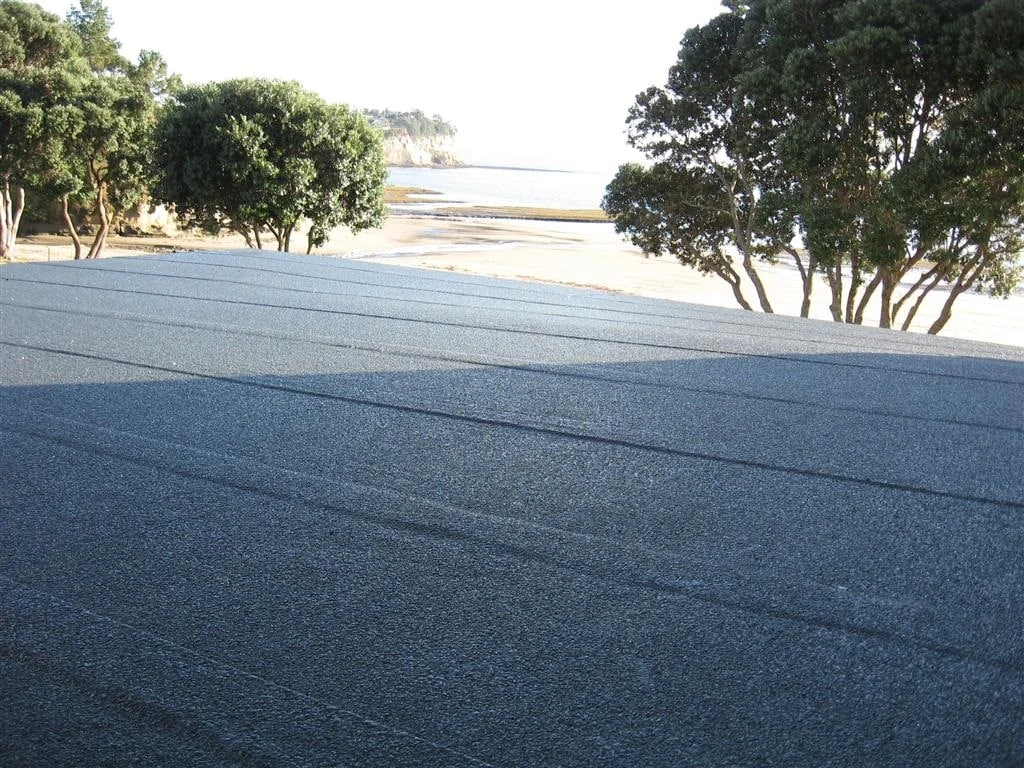
Sika Sarnafil's PVC Membrane on Specialized Canton Roofs
Sarnafil comes up in our Stark County work specifically when a roof has requirements that push past what a standard TPO or EPDM spec is built for — heavy chemical exposure, an unusual roof shape, or an owner who wants a membrane with a long documented track record in demanding applications. It's a narrower use case than the manufacturers we specify most often, and that's by design.
A Different Corporate Background
Sika is a global specialty chemicals and construction materials company headquartered in Switzerland, and the Sarnafil roofing brand traces its PVC membrane technology back further than most of the single-ply systems common in American commercial roofing today — PVC roofing membrane was established as a European building product well before it became a mainstream American commercial roofing choice. That longer PVC-specific history is part of why we consider Sarnafil seriously on projects where PVC's chemical resistance is genuinely the driving requirement, rather than a nice-to-have.
Where PVC's Chemistry Actually Matters
Sarnafil's homogeneous PVC membrane resists oils, greases, and a range of chemical exposures better than EPDM or standard TPO, which is the same core reasoning behind any PVC spec — but Sarnafil's product line and accessory system focus on that use case specifically, rather than treating PVC as one option in a broader single-ply catalog. For food processing and manufacturing buildings around Stark County with rooftop chemical exhaust or grease discharge, that focus shows up in the depth of the accessory and detailing options available.
Hot-air welded seams work the same way on Sarnafil PVC as any other PVC membrane, producing a fused, continuous joint at every lap rather than a taped or adhered seam.
Architectural and Curved Applications
PVC membrane's flexibility makes it well suited to curved rooflines, architectural details, and complex geometry in a way that stiffer membrane systems sometimes aren't, and Sarnafil has a long history supplying that kind of specialized application on institutional and architecturally distinctive buildings. That's a less common need on the straightforward flat-roof manufacturing and warehouse buildings that make up most of our Canton work, but it comes up on event venues, hospitality projects, and any building where the roofline itself is part of the architecture rather than hidden behind a parapet.
- Homogeneous PVC membrane with strong resistance to oils, grease, and chemical exposure
- Long-standing European manufacturing history specifically in PVC roofing technology
- Well suited to curved rooflines and architecturally complex roof geometry
- Hot-air welded seam system consistent with PVC installation standards generally
- Narrower, more specialized use case than broad single-ply manufacturers covering TPO and EPDM alike
Cost Versus Broader Single-Ply Options
Sarnafil PVC generally costs more than a standard TPO spec from a broad single-ply manufacturer, consistent with PVC pricing generally, and we don't recommend it as a default choice outside the situations where PVC's specific chemical resistance or architectural flexibility is the actual project requirement. For a standard manufacturing plant reroof without chemical exposure concerns, a TPO spec from another manufacturer is typically the more cost-effective choice, and we'll say so directly rather than push a higher-margin system that doesn't fit the building.
Warranty and Installation Requirements
Sarnafil warranties, like other major manufacturers, are tied to approved installation practices and system components. We follow those specifications on any Sarnafil-spec'd project, and as with every manufacturer we work with, we don't claim a specific certification tier in our marketing — we'll provide the documentation relevant to whatever warranty program applies to a given project.
Where This Fits Stark County's Building Mix
Most of the roof stock we work on across Canton, Massillon, and the surrounding manufacturing corridor is straightforward flat-roof industrial and warehouse space, which is exactly the category where a broad TPO manufacturer usually makes more sense than a PVC specialist. The Sarnafil conversation comes up specifically on the smaller subset of buildings with real grease or chemical discharge, or the occasional project — an event venue, a hospitality build, a distinctive institutional building — where the roofline itself needs the flexibility PVC offers. We don't push Sarnafil onto a project that doesn't need it, because a standard flat industrial roof doesn't need to carry that cost premium.
Long-Term Membrane Behavior
Because Sarnafil's PVC technology has such a long documented history globally, there's a substantial body of real-world performance data on how the membrane ages, particularly around plasticizer retention and seam durability over multi-decade service periods. That data gives us more confidence recommending PVC on a long-hold building where the owner genuinely wants the longest practical service life for a roof with chemical exposure, rather than a shorter-term ownership horizon where a lower-cost TPO spec might make more financial sense.
Common Questions About Sarnafil PVC
Is Sarnafil PVC significantly better than other manufacturers' PVC membrane?
Core PVC chemistry performs similarly across established, reputable manufacturers. Sarnafil's particular strength is its long-standing specialization in PVC specifically and depth of accessory options for complex or architectural applications.
When does it make sense to pay the premium for Sarnafil over a standard TPO spec?
When the roof has real chemical or grease exposure, or when the roofline includes curved or architecturally complex geometry that benefits from PVC's flexibility. Outside those situations, TPO is usually the more cost-effective choice.
Can Sarnafil PVC be welded to PVC from a different manufacturer during a repair?
We test compatibility before committing to that approach — PVC formulations can vary enough between manufacturers that a clean weld isn't automatically guaranteed, so we verify rather than assume.
Is Sarnafil a reasonable choice for a standard warehouse roof with no chemical exposure?
It's not the most cost-effective choice for that application. We'd typically recommend a standard TPO spec from a broader single-ply manufacturer for a warehouse without specific chemical resistance requirements.
Does Sarnafil PVC hold up well in Ohio's freeze-thaw climate?
Modern PVC formulations maintain flexibility well through cold-weather cycling. We check for brittleness at seams and flashings during inspections on any aging PVC roof, the same way we would with any membrane system.